The Frequency of Care
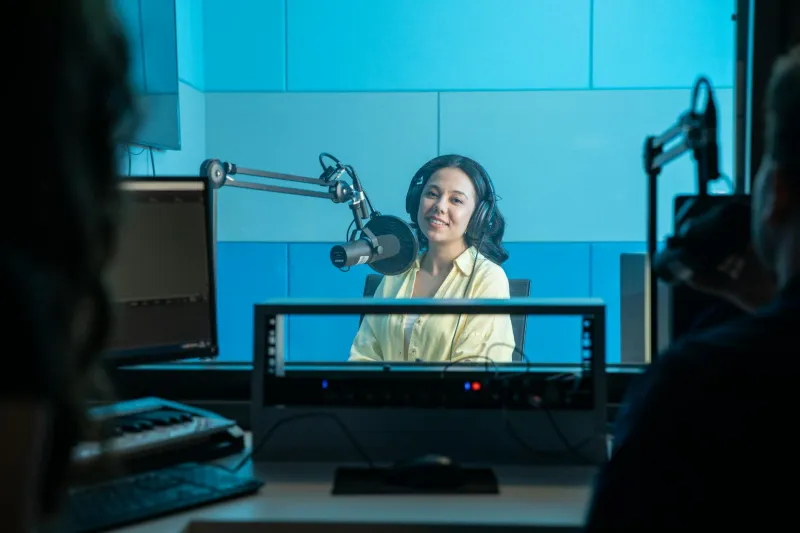
Every Sunday morning at 9 AM, while most of Britain is nursing hangovers or reading the papers in bed, Janet Morrison climbs four flights of stairs to a cramped studio above the children's ward at Leeds General Infirmary. For the next three hours, she'll broadcast to an audience she can't see, playing requests for people she may never meet, spinning records that might be the only bright spot in someone's darkest day.
 Photo: Leeds General Infirmary, via c8.alamy.com
Janet is one of roughly 2,000 volunteers keeping Britain's hospital radio stations alive—a network of hyperlocal broadcasters that's been providing bedside entertainment since the 1920s, yet remains virtually invisible to the outside world. These aren't professional DJs or celebrity presenters. They're retired teachers, working parents, students, and pensioners who give up weekends and evenings to bring music and human connection to patients who often have little of either.
"People ask why I spend my Sundays talking to empty air," Janet says, adjusting her headphones while cueing up a request for Vera Lynn. "But it's not empty air. Behind every request card is someone who needs to hear their favourite song, someone who wants to feel less alone. That's worth more than any lie-in."
Invisible Networks
Hospital radio operates in the margins of Britain's media landscape. Unlike commercial stations chasing ratings or BBC services serving mass audiences, these micro-broadcasters focus on a captive, vulnerable audience with unique needs. Patients can't change the channel if they don't like the music—they're stuck with whatever's on offer. This responsibility shapes everything from playlist decisions to presenter training.
At Birmingham Children's Hospital, Radio Lollipop broadcasts eighteen hours daily to young patients across four wards. The station's programming reflects its audience: gentle wake-up shows for anxious parents, educational content during school hours, and soothing evening programmes designed to help children sleep in unfamiliar surroundings.
 Photo: Birmingham Children's Hospital, via artworks.thetvdb.com
"We're not trying to replicate commercial radio," explains station manager David Patel, who's volunteered here for twelve years. "Our listeners can't drive away if they don't like what we're playing. They might be here for weeks or months. We become part of their recovery environment."
The station receives dozens of request cards daily, each offering glimpses into private struggles. A seven-year-old asks for 'The Lion King' soundtrack before surgery. A teenager with leukaemia wants to hear the latest grime tracks to feel connected to friends. Parents request lullabies they've forgotten the words to. Each card represents not just musical preference, but human need.
More Than Music
Hospital radio's value extends beyond entertainment. For long-term patients, especially children and elderly people, the familiar voices of regular presenters become anchors in an otherwise disorienting experience. Presenters learn to read their invisible audience, adjusting energy levels and content to match the rhythms of hospital life.
"You develop an intuition about what people need to hear," says Mike Henderson, who's presented the breakfast show at Royal Liverpool University Hospital for eight years. "Monday mornings need gentle encouragement. Friday afternoons want celebration. Christmas Day requires careful balance between joy and sensitivity for those who can't be home."
 Photo: Royal Liverpool University Hospital, via www.fira-la.com
Mike's show includes a 'good news' segment featuring patient recovery stories, staff achievements, and community support messages. During COVID-19 lockdowns, when visitors were banned, these segments became lifelines connecting isolated patients to the outside world.
The psychological impact is measurable. A 2019 study by Manchester University found that patients with access to hospital radio showed reduced anxiety levels and reported feeling less isolated during treatment. The research suggested that localised, human-scale broadcasting provided comfort that generic media couldn't match.
The Volunteer Spirit
What drives people to spend weekends in windowless studios, talking to audiences they can't see? The motivations are as varied as the volunteers themselves. Some are former patients grateful for care they received. Others are retired broadcasters seeking purposeful outlets for their skills. Many simply want to contribute something meaningful to their communities.
Peter Jameson started volunteering at Addenbrooke's Hospital Radio Cambridge after his wife spent three months in intensive care. "Sitting by her bedside hour after hour, I saw how much the little things mattered—a friendly voice, a familiar song, proof that the world outside still existed," he recalls. "When she recovered, I wanted to provide that comfort for other families going through similar experiences."
Peter now presents a weekly jazz programme and coordinates the station's request system. He's learned that hospital radio volunteers develop unique skills—reading emotional subtext in brief request cards, maintaining optimism while acknowledging real suffering, and finding the right words for impossible situations.
Technical Challenges
Operating hospital radio requires navigating complex technical and regulatory challenges. Stations must broadcast without interfering with medical equipment. Content must be carefully curated to avoid triggering anxiety in vulnerable listeners. Programming schedules must accommodate medical routines, avoiding loud music during rest periods or energetic content before surgery.
The digital transition has created new opportunities and obstacles. Some hospitals now offer patients tablet access to on-demand content alongside traditional radio. Others struggle with aging infrastructure and limited technical support. The volunteer model that keeps stations running also limits their ability to upgrade equipment or expand services.
"We're essentially running a radio station on charity shop budgets," admits Sarah Collins, who manages technical operations at St. George's Hospital Radio in London. "But that constraint forces creativity. We've learned to do more with less, to focus on what really matters—human connection through sound."
The Digital Challenge
Hospital radio faces an uncertain future as media consumption habits evolve. Younger patients arrive with smartphones loaded with personal playlists. Streaming services offer unlimited choice and professional production values. Why listen to amateur presenters when Spotify knows your exact preferences?
Yet hospital radio's advocates argue that personalisation isn't always what patients need. The surprise of discovering new music, the comfort of shared experience, and the knowledge that someone is actively choosing content for your wellbeing—these human elements can't be algorithmed.
"Spotify doesn't know you're scared about surgery tomorrow," points out Janet Morrison. "It doesn't understand that hearing other people's stories helps you feel less alone. It can't offer the prayer request or the birthday shout-out that makes you feel seen."
Some stations are embracing hybrid approaches, combining traditional broadcasting with digital engagement. Patients can submit requests via apps, access archived content, or even participate in live shows through video calls. The technology changes, but the core mission remains constant—providing human connection through sound.
Quiet Heroes
As commercial radio consolidates and national broadcasters chase mass audiences, hospital radio represents something increasingly rare—media made by communities for communities, with service rather than profit as the primary motive. These stations operate below the radar of industry awards and listener surveys, measuring success not in market share but in thank-you cards from discharged patients.
"We'll never trend on Twitter or win broadcasting awards," reflects David Patel at Radio Lollipop. "But we might be the voice that helps a frightened child fall asleep, or the song that reminds someone of happier times. In the end, that's worth more than any rating."
Across Britain, hospital radio volunteers continue their quiet work—curating playlists for invisible audiences, reading request cards that reveal private hopes and fears, speaking into microphones with the faith that someone, somewhere, needs to hear exactly what they're saying. In a world increasingly dominated by algorithmic personalisation and mass-market entertainment, these bedside broadcasters preserve something essentially human—the knowledge that sometimes the most powerful communication happens between strangers who choose to care for each other.
The frequency of hospital radio isn't just about bandwidth—it's about the frequency of human kindness, transmitted daily through the invisible networks that connect us all.