The Great Divide
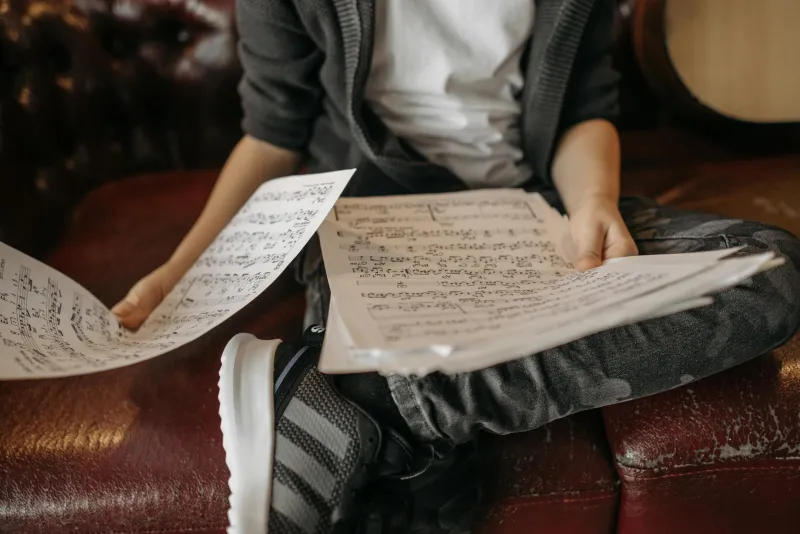
Every Saturday morning across Britain, the same scene plays out in community centres, church halls, and music schools: nervous children clutching sheet music, waiting to perform three pieces and some scales for an examiner who will award them a numerical grade that somehow quantifies their musical worth. It's a ritual so embedded in British musical education that questioning it feels almost heretical.
Yet that's exactly what needs to happen.
The Associated Board of the Royal Schools of Music (ABRSM) system, along with its competitors like Trinity and RSL, has become the dominant framework for musical learning in the UK. Over 650,000 music exams are taken annually, generating millions in revenue and creating a standardised pathway from beginner to 'advanced' musician. But at what cost?
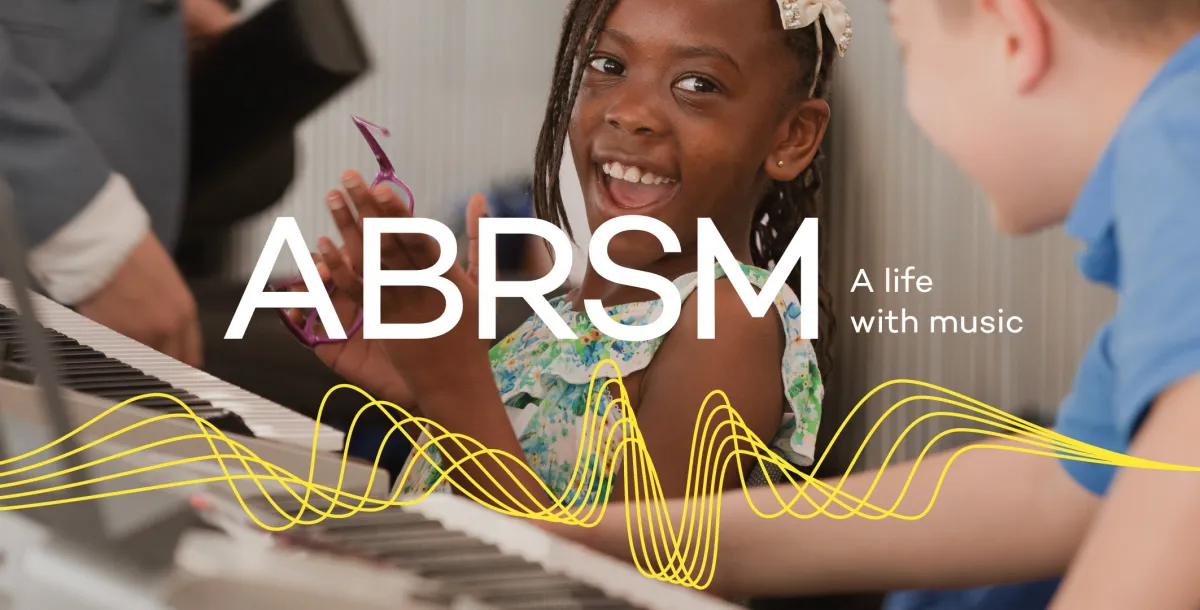 Photo: Associated Board of the Royal Schools of Music, via worldbranddesign.com
The Production Line Mentality
Speak to any piano teacher, and they'll tell you about the Grade 5 Wall – that moment when promising young musicians suddenly lose interest, burnt out by years of scales, arpeggios, and playing pieces they never chose. It's the point where musical education reveals its fundamental flaw: prioritising measurement over meaning.
"The system turns music into a series of hoops to jump through," argues Sarah Chen, who left her job as a conservatoire-trained piano teacher to develop alternative approaches. "Children learn to play pieces perfectly for exams, then immediately forget them. They can execute a Grade 6 Bach invention flawlessly but can't improvise a simple melody or play 'Happy Birthday' by ear."
The problem isn't the music itself – much of the ABRSM syllabus represents centuries of musical excellence. The issue lies in how it's taught and tested. The exam system rewards technical precision and adherence to prescribed interpretations while inadvertently punishing creativity, personal expression, and musical curiosity.
The Confidence Crusher
Perhaps more damaging than what the system teaches is what it destroys: confidence. The grading structure creates an artificial hierarchy that labels children as 'Grade 3' or 'Grade 7' musicians, as if musical ability could be reduced to a single number.
Tom Harrison, now a successful session guitarist, still remembers failing his Grade 4 guitar exam at age thirteen. "I was already writing songs, playing in a band, learning everything by ear. But because I couldn't sight-read fast enough and got nervous playing classical pieces I'd never chosen, I was told I wasn't good enough for Grade 4. It took years to rebuild my confidence."
The pass/fail mentality is particularly toxic in a creative field where progress is rarely linear and talent manifests in countless different ways. A child might struggle with the technical demands of a Chopin etude but possess an innate understanding of rhythm that could make them an exceptional drummer. The grade system has no mechanism for recognising or nurturing such diverse talents.
The Alternative Reality
Meanwhile, some of Britain's most celebrated musicians never touched a grade exam. Ed Sheeran, who dominates global charts, is largely self-taught. Radiohead's Thom Yorke famously struggled with traditional musical education. The Beatles, perhaps Britain's greatest musical export, couldn't read music between them.
 Photo: Ed Sheeran, via media.koobit.com
This isn't an argument against musical education – it's an argument for better musical education. Countries like Denmark and Finland, which consistently outperform the UK in creativity indices, favour exploratory, student-led approaches over rigid examination systems.
"In Finland, children spend their first few years just exploring sounds, improvising, creating," explains Dr. Maria Korhonen, who studies comparative music education. "Technical skills develop naturally through play and experimentation. The idea of testing a seven-year-old's ability to play scales would seem absurd."
The Hidden Curriculum
The grade system teaches children more than music – it indoctrinates them into a worldview where external validation matters more than internal satisfaction, where conformity trumps creativity, and where artistic expression must be quantified to have value.
Consider the typical Grade 5 piano exam: three pieces chosen from a predetermined list, scales and arpeggios performed at specific tempos, sight-reading of unfamiliar music, and aural tests that reward 'correct' answers about musical elements. Where in this structure is space for the child who wants to explore jazz harmony, write their own compositions, or simply play music that moves them?
"We're creating musical accountants, not musicians," observes James Mitchell, a composer who works with young people in Hackney. "They can execute instructions perfectly but can't think musically for themselves. It's the opposite of what music education should achieve."
The Economics of Examination
The grade system persists partly because it serves everyone except the students. Parents get measurable progress they can brag about to other parents. Teachers get a structured curriculum that requires minimal creativity or adaptation. Exam boards get a lucrative business model. Music shops sell method books and sheet music.
Meanwhile, children are funnelled through a system designed for administrative convenience rather than musical development. The average student spends £500-800 annually on lessons, books, and exam fees, often for an education that actively discourages the experimentation and play that make music magical.
Breaking the Cycle
Fortunately, alternatives are emerging. Some teachers are abandoning grades entirely, focusing instead on student-led projects, ensemble playing, and creative exploration. Organizations like Musical Futures and Wider Opportunities promote inclusive, non-hierarchical approaches that prioritise engagement over achievement.
"I stopped entering students for exams five years ago," explains violin teacher Rebecca Walsh from Manchester. "Instead, we work towards performances they choose – playing at local care homes, busking for charity, recording their own compositions. The improvement in their playing and, more importantly, their love of music has been remarkable."
Even within the system, progressive teachers are finding ways to subvert its limitations. They use grade pieces as starting points for improvisation, encourage students to arrange exam repertoire for different instruments, or supplement formal lessons with informal jam sessions.
The Way Forward
The solution isn't to abandon musical education but to radically reimagine it. Instead of asking "What grade are you?" we should ask "What music do you love?" Instead of measuring technical proficiency in isolation, we should assess musical understanding in context. Instead of standardising musical development, we should celebrate its diversity.
This means training teachers to facilitate rather than direct musical learning, developing assessment methods that capture creativity alongside competence, and creating pathways for students whose talents don't fit traditional moulds.
Most importantly, it means remembering why we learn music in the first place: not to pass exams or impress examiners, but to participate in one of humanity's most profound forms of expression and communication.
The Human Cost
Every year, thousands of young Britons abandon musical instruments around Grade 5, convinced they're 'not musical' because they couldn't navigate an arbitrary assessment system. How many potential composers, songwriters, and performers have we lost to this confidence-crushing conveyor belt?
Music is too important – too joyful, too transformative, too fundamentally human – to be reduced to grades and certificates. It's time to admit that our examination system, however well-intentioned, is failing the very people it claims to serve.
The question isn't whether we can afford to change how we teach music in Britain. It's whether we can afford not to.