The Other Side of the Story
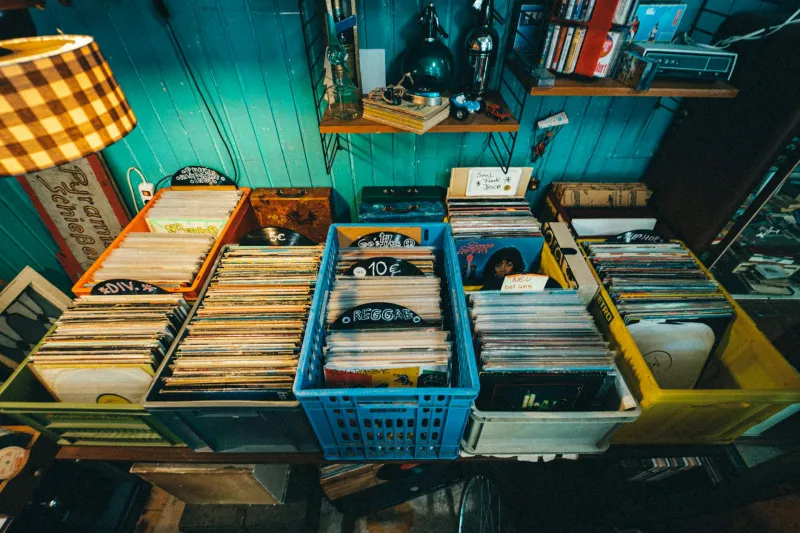
In a cramped record shop in Manchester's Northern Quarter, Dave Morrison pulls out a battered 7-inch single. The A-side is 'Love Me Do' – The Beatles' first hit. But Dave's eyes light up when he flips it over to reveal 'P.S. I Love You', the forgotten B-side that showcases Paul McCartney's vulnerability in a way the chart-topper never could.
"This is where the real magic lives," he says, cradling the vinyl like a religious text. "B-sides are where artists told the truth."
Dave is part of a peculiarly British obsession: the cult of the B-side collector. Across the country, in bedroom archives and converted garages, thousands of music fans dedicate their lives to hunting down the tracks that never troubled the charts but often revealed more about an artist's soul than any hit ever could.
The Art of the Throwaway
The B-side was born from necessity. Record labels needed something to fill the flip side of a single, often viewing it as musical wallpaper – important enough to exist, forgettable enough to ignore. But this creative freedom produced some of Britain's most innovative music.
"When there's no pressure to succeed, artists take risks," explains Dr. Jenny Crawford, who's spent decades studying British popular music. "B-sides became laboratories for experimentation, places where bands could indulge their weirdest impulses without commercial consequences."
The results were often extraordinary. The Smiths used B-sides to showcase Morrissey's most introspective lyrics and Johnny Marr's most adventurous arrangements. Blur's B-sides revealed the art-school pretensions that their hits carefully concealed. Even manufactured pop acts like Duran Duran used their flip sides to explore jazz fusion and ambient soundscapes that would have horrified their teen fanbase.
Collectors' Corner
In Birmingham, retired teacher Margaret Hollis has turned her spare bedroom into a shrine to British punk B-sides. Shelves groan under the weight of limited pressings, import singles, and promotional copies that document the movement's chaotic creativity.
"The Sex Pistols' 'Flowers of Romance' tells you more about their artistic ambitions than 'Anarchy in the UK' ever could," she argues, pulling out a pristine copy of the single. "It's experimental, vulnerable, completely uncommercial – everything punk was supposed to be before it became a brand."
Margaret's collection spans from The Clash's reggae experiments to Wire's avant-garde electronic explorations, each B-side representing a road not taken, a glimpse of what British music might have become if commerce hadn't intervened.
The Britpop Goldmine
No era produced more essential B-sides than Britpop. As bands competed for chart positions with increasingly anthemic singles, their B-sides became refuges for intimacy and experimentation.
Oasis used their flip sides to showcase Noel Gallagher's songwriting range, from the acoustic beauty of 'Talk Tonight' to the psychedelic sprawl of 'The Swamp Song'. Radiohead's B-sides documented their evolution from indie also-rans to art-rock pioneers, with tracks like 'Creep (Acoustic)' and 'Maquiladora' showing a band unafraid to alienate their fanbase in pursuit of artistic growth.
"Britpop B-sides are where the movement's true legacy lives," argues London collector James Webb, whose archive contains over 3,000 UK singles from the era. "The hits were designed to unite crowds at festivals, but the B-sides were made for headphones and introspection."
Digital Ghosts
The death of the physical single has created a new category of collectible: the digital B-side. Streaming services and download platforms have largely abandoned the format, making the B-sides that do exist feel even more precious.
"Modern artists don't think in terms of A-sides and B-sides anymore," observes music journalist Sarah Phillips. "Everything's an album track or a standalone single. We've lost that sense of hierarchy, of hidden treasures waiting to be discovered."
This has only increased the value of historical B-sides. Original pressings that once sold for pounds now command hundreds, while rare promotional copies can fetch thousands at auction. But for true collectors, the monetary value is irrelevant – it's about preserving musical DNA that might otherwise vanish.
The Democracy of Discovery
What makes B-side collecting uniquely democratic is its accessibility. While rare albums or limited editions might be financially out of reach, B-sides exist across every price point. A charity shop might yield a forgotten gem for 50p, while a specialist dealer might charge £50 for the same track in better condition.
"It's not about having the most expensive records," explains Morrison. "It's about having the most interesting ones. A scratched copy of 'Strawberry Fields Forever' tells the same story as a mint pressing – it just has more character."
This egalitarian approach extends to the music itself. B-sides were never about sophistication or commercial appeal – they were about honesty, experimentation, and the kind of creative risks that make collecting worthwhile.
Preserving the Flip Side
As physical media continues its decline, B-side collectors have become unofficial archivists of British music history. Their obsessive cataloguing and preservation efforts ensure that these musical footnotes survive for future generations.
"We're not just collectors," insists Hollis. "We're custodians. These tracks document the creative process, the artistic journey, the human side of music-making. Without them, we only get half the story."
In an age of algorithmic playlists and instant gratification, the B-side collector's patience feels almost revolutionary. They understand that the best music often hides in plain sight, waiting for someone curious enough to flip the record and discover what lies on the other side.
Perhaps that's the real treasure these collectors guard: the reminder that in music, as in life, the most interesting stories are often found where nobody thinks to look.