The Revolution Started with a Stapler
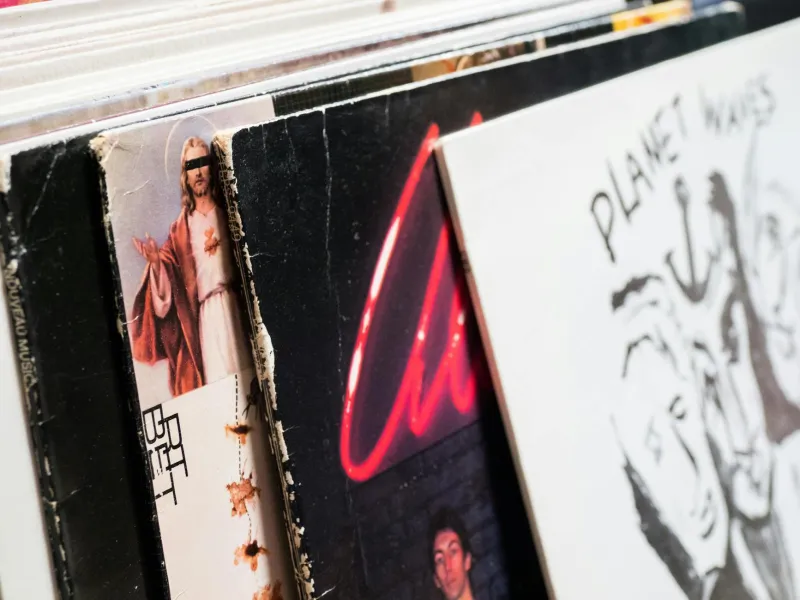
Walk into any record shop worth its salt in 1977, and you'd find them tucked between the seven-inches: crudely photocopied sheets with names like Sniffin' Glue, Ripped & Torn, and Chainsaw. These weren't professional publications with glossy covers and celebrity interviews. They were something far more dangerous – the unfiltered thoughts of music fans who'd decided their voices mattered.
The British fanzine scene didn't emerge from boardrooms or journalism schools. It crawled out of bedsits, squats, and the back rooms of pubs where the jukebox had been unplugged to make room for live bands. Mark Perry's Sniffin' Glue is often credited as the catalyst, but the truth is messier and more beautiful than any origin story suggests. Across Britain, kids with strong opinions and access to their school's photocopier were simultaneously discovering they could create their own media.
Beyond Punk's Paper Trail
While punk provided the initial spark, Britain's fanzine culture evolved into something far more diverse. The eighties saw publications like The Legend! championing indie bands that wouldn't see mainstream coverage for years. Bucketfull of Brains dove deep into garage rock archaeology, while Debris covered everything from post-punk to industrial with the same passionate intensity.
These weren't just music magazines – they were manifestos. Each issue represented hours of unpaid labour: writing reviews, conducting interviews via payphone, cutting and pasting layouts by hand, then standing outside venues selling copies for 50p each. The economics never made sense, but that was precisely the point. This was journalism as art form, criticism as creative expression.
The Britpop Explosion and Paper Dreams
The nineties brought both opportunity and challenge. Britpop's mainstream success meant more bands, more venues, more music to cover. Fanzines like Ablaze! and Purr found themselves documenting a scene that was simultaneously underground and overground. Some writers graduated to major publications, their fanzine credentials becoming calling cards in an industry suddenly hungry for authentic voices.
But success brought complications. As bands grew bigger, access became more controlled. The informal networks that had sustained fanzine culture – chatting to bands after gigs, getting demo tapes pressed into your hand – began to professionalise. PR companies replaced direct contact, and suddenly the democratic spirit that had defined fanzine culture felt under threat.
The Digital Reckoning
The internet didn't kill fanzines immediately – it was more like a slow-acting poison. Why spend money on photocopying when you could reach thousands instantly online? Why limit yourself to local distribution when the whole world was your audience? By the early 2000s, many fanzine editors had migrated to blogs, forums, and eventually social media.
Yet something was lost in translation. The physical act of creating a fanzine – the careful selection of fonts, the deliberate placement of images, the weight of paper in readers' hands – carried meaning that digital formats couldn't replicate. A fanzine was an object, a statement, a small rebellion against mass media's homogenisation.
The Stubborn Survivors
Talk to Phil McMullen, who's been producing Terrascope magazine since 1989, or the team behind Shindig!, and you'll find people who never stopped believing in print's power. These publications have evolved, incorporating colour printing and professional design, but they've retained the essential fanzine spirit: passionate advocacy for music that deserves better than algorithmic discovery.
"There's something about holding a physical magazine that makes you engage differently with the content," explains one long-time fanzine editor who preferred anonymity. "When someone's spent money to buy your publication, they're more likely to read the whole review, discover that band you're championing, follow up on your recommendations."
The Cultural Archaeology Project
What these surviving publications represent isn't just nostalgia – it's cultural archaeology. In an age where music journalism increasingly focuses on breaking news and hot takes, fanzines offer something rarer: deep dives, contextual analysis, and the space to develop complex arguments about why certain songs matter.
They're also preserving a particular way of engaging with music culture. Fanzine writers don't just consume music; they participate in creating the narrative around it. Their reviews become part of a band's story, their interviews capture moments that might otherwise vanish into the digital ether.
The Memorial Question
So should we mourn the fanzine era or celebrate its stubborn persistence? Perhaps the answer lies in recognising what we've gained and lost. Digital platforms have democratised music criticism in ways the fanzine scene never could – anyone can start a music blog, build an audience, influence taste.
But we've also lost something harder to quantify: the commitment that comes with physical production, the community formed through hand-to-hand distribution, the way constraints breed creativity. When you've got sixteen pages and a tiny budget, every word counts.
The few remaining print fanzines aren't museum pieces – they're proof that some forms of cultural expression resist digitalisation. In an age of infinite scroll and algorithmic feeds, there's something almost radical about creating something finite, physical, deliberately crafted.
Perhaps that's their greatest legacy: reminding us that not everything needs to be instant, viral, or optimised for engagement. Sometimes the most important conversations happen in the margins, printed on cheap paper, distributed by hand at gigs where the music still matters more than the metrics.