The Saturday Night Ritual
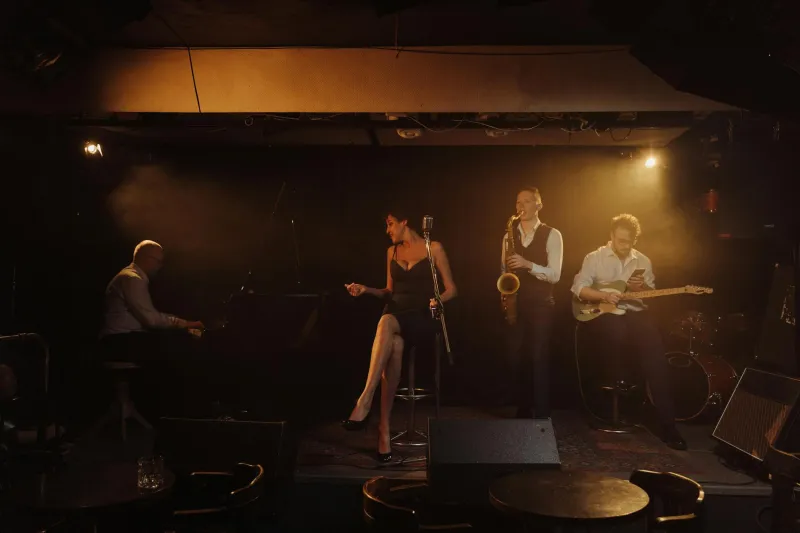
Every Saturday at 8pm sharp, the curtains would part on a thousand stages across Britain. Not in grand theatres or glittering venues, but in the modest function rooms of Working Men's Clubs, where the entertainment was as reliable as the mild bitter and twice as warming.
For decades, this circuit was the backbone of British entertainment, a parallel universe where future household names cut their teeth before audiences who'd paid their subs and expected value for money. The unwritten rules were simple: make us laugh, make us dance, or make us cry – but never make us feel like mugs.
"You learned to read a room fast," recalls Maureen Fletcher, who managed bookings for Stockport Working Men's Club for thirty-seven years. "These weren't tourists or theatre-goers. They were your neighbours, and they'd tell you straight if you weren't up to scratch."
The Making of Stars
The circuit's roll call reads like a who's who of British entertainment. Ken Dodd honed his manic energy in these rooms, learning that a good joke could stretch for ten minutes if the crowd was with you. Early Northern Soul DJs discovered that working men wanted to dance as much as drink, spinning rare American imports to packed floors in Wigan and Blackpool.
But it wasn't just about launching careers – it was about sustaining them. Established acts would return to the circuit between television appearances, keeping their skills sharp and their feet on the ground. The late Bernard Manning might have become a controversial figure, but his decades on the Working Men's Club circuit taught him timing that money couldn't buy.
"The circuit was honest," explains entertainment historian Dr. Sarah Whitfield. "No amplification could save a weak act, no marketing could mask a lack of talent. You succeeded or failed on your ability to connect with ordinary people having a night out."
The Peculiar Democracy of Entertainment
What made these venues unique was their democratic approach to entertainment. Unlike commercial venues where profit margins dictated programming, Working Men's Clubs were member-owned and operated. The entertainment committee – usually comprising local volunteers with strong opinions about value for money – held absolute power over bookings.
This created a fascinating tension between artistic ambition and community expectations. Acts had to balance innovation with familiarity, pushing boundaries while respecting the unspoken contract with their audience. The result was a form of popular entertainment that was both conservative and surprisingly adventurous.
"We had drag acts in the 1960s when television wouldn't touch them," remembers Tommy Hargreaves, former secretary of Oldham Central Club. "But they had to be funny first, provocative second. The audience would accept anything if it entertained them."
The Borrowed Glamour
The title "Borrowed Suits and Borrowed Time" captures something essential about the circuit's aesthetic. Many performers couldn't afford stage wardrobes, borrowing dinner jackets and sequined dresses from more established acts or sympathetic club stewards. This shared economy of glamour created a sense of community that transcended individual ambition.
The clubs themselves embodied this borrowed glamour. Function rooms transformed with paper streamers and coloured lights, creating spaces that felt both intimate and special. The stage might be a raised platform, the dressing room a store cupboard, but for those few hours, magic was possible.
The Great Decline
By the 1980s, the circuit was under pressure. Television offered entertainment without leaving home, while changing social patterns meant fewer people wanted to spend Saturday nights in clubs that still felt rooted in the 1950s. The rise of comedy clubs and music venues offered alternative paths for performers, often with better pay and less restrictive audiences.
The final blow came from within. As working men's clubs struggled with declining membership, entertainment budgets were often the first casualty. The weekly variety show became a monthly event, then a special occasion, then a memory.
"We went from booking acts fifty-two weeks a year to maybe ten," says Fletcher sadly. "The heart went out of it when the regularity disappeared. Entertainment needs rhythm, routine, expectation."
Legacy in the Spotlight
Yet the circuit's influence persists in unexpected ways. The timing, audience awareness, and unpretentious professionalism it demanded can be seen in everyone from Peter Kay to Sarah Millican. The Northern Soul scene it nurtured continues to pack dance floors across Europe. Even reality television, with its emphasis on ordinary people's extraordinary moments, owes something to the Working Men's Club tradition.
More importantly, the circuit represented something increasingly rare in modern entertainment: a space where performers and audiences shared genuine community. The borrowed suits and borrowed time created real connections that lasted long after the curtains closed.
Today, as we debate the value of live entertainment and the importance of community spaces, perhaps it's time to remember the Saturday night magic that happened in function rooms across Britain. It wasn't glamorous, but it was real – and for millions of people, that was more than enough.