The Permanent Playlist
In a cramped tattoo parlour above a chip shop in Manchester, Sarah Collins rolls up her sleeve to reveal a meticulously detailed recreation of Joy Division's 'Unknown Pleasures' album cover wrapped around her forearm. Below it, in Ian Curtis's own handwriting, runs the line 'Love will tear us apart.' She got it done on the anniversary of Curtis's death, she tells me, because Factory Records and everything that came from it shaped who she became.
"People think it's mental," she says, flexing her arm so the radio waves seem to pulse. "But I've got mates with their kids' names tattooed on them, and they might grow up to be serial killers. At least I know Joy Division will always be brilliant."
Sarah's not alone. Across Britain, a devoted subculture of music fans are turning their bodies into walking museums of sound, permanently marking themselves with the albums, lyrics, and imagery that define their lives. It's fandom taken to its logical extreme – and perhaps its most honest expression.
More Than Merchandise
Unlike a band t-shirt that can be relegated to the back of a wardrobe or a vinyl collection that gathers dust, a music tattoo demands commitment. It's a declaration that this song, this album, this moment in musical history matters enough to carry forever.
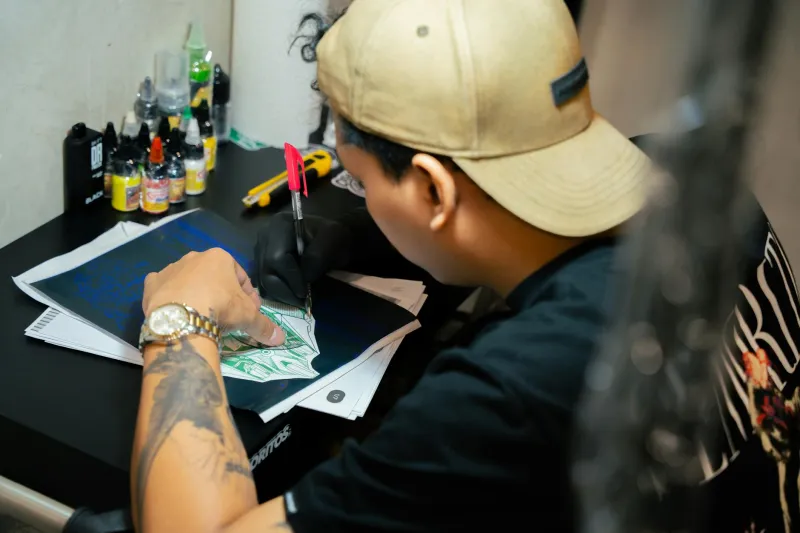
Tommy Henderson, who owns Rebel Ink in Glasgow, has been tattooing music-themed pieces for over fifteen years. His portfolio reads like a greatest hits of British music culture: Pink Floyd prisms, Stone Roses lemons, Arctic Monkeys lyrics, and countless tributes to local heroes like The Fratellis.
"The conversations are always the deepest," he explains, cleaning his needle between clients. "Someone comes in wanting a Celtic cross, fair enough. But when they want 'Wonderwall' lyrics down their ribs, there's always a story. Usually involves an ex, a dead mate, or the night their life changed."
The stories Henderson hears would fill several books. There's the woman who got Adele's 'Someone Like You' tattooed after her divorce, the bloke who marked his recovery from addiction with The Verve's 'Bitter Sweet Symphony,' and the couple who got matching Oasis and Blur tattoos as a Romeo and Juliet-style statement about their divided musical loyalties.
The Art of Musical Memory
What's fascinating about music tattoos isn't just the dedication they represent, but how they function as external hard drives for emotional memory. Dr. Rebecca Martinez, who studies music psychology at Liverpool University, suggests these permanent markings serve as "embodied nostalgia."
 Photo: Liverpool University, via www.burohappold.com
"Music is already deeply connected to memory formation," she explains. "When you add the physical permanence and pain of tattooing, you're creating multiple layers of association. The tattoo becomes a trigger that can instantly transport someone back to a specific time, place, or feeling."
This explains why music tattoos often commemorate more than just favourite songs. They mark first gigs, festivals that changed everything, or the soundtrack to pivotal life moments. Jamie Morrison, a 34-year-old from Birmingham, has his entire back dedicated to Glastonbury 2005 – not because it was the best lineup ever, but because it was where he met his wife.
"Every band name, every stage, every muddy field is mapped out across my shoulders," he grins. "My wife thinks I'm mad, but she's got 'Coldplay' written in tiny letters behind her ear, so she can't really talk."
Beyond the Obvious
While some choose obvious imagery – band logos, album covers, portrait work – others opt for more cryptic references that only true fans would recognise. It's musical gatekeeping made flesh, a way of identifying fellow devotees in the wild.
Lindsay Park, a teacher from Edinburgh, has what looks like random coordinates tattooed on her wrist. They're actually the longitude and latitude of the Barrowland Ballroom, where she saw Belle and Sebastian perform an intimate acoustic set that she still considers the best gig of her life.
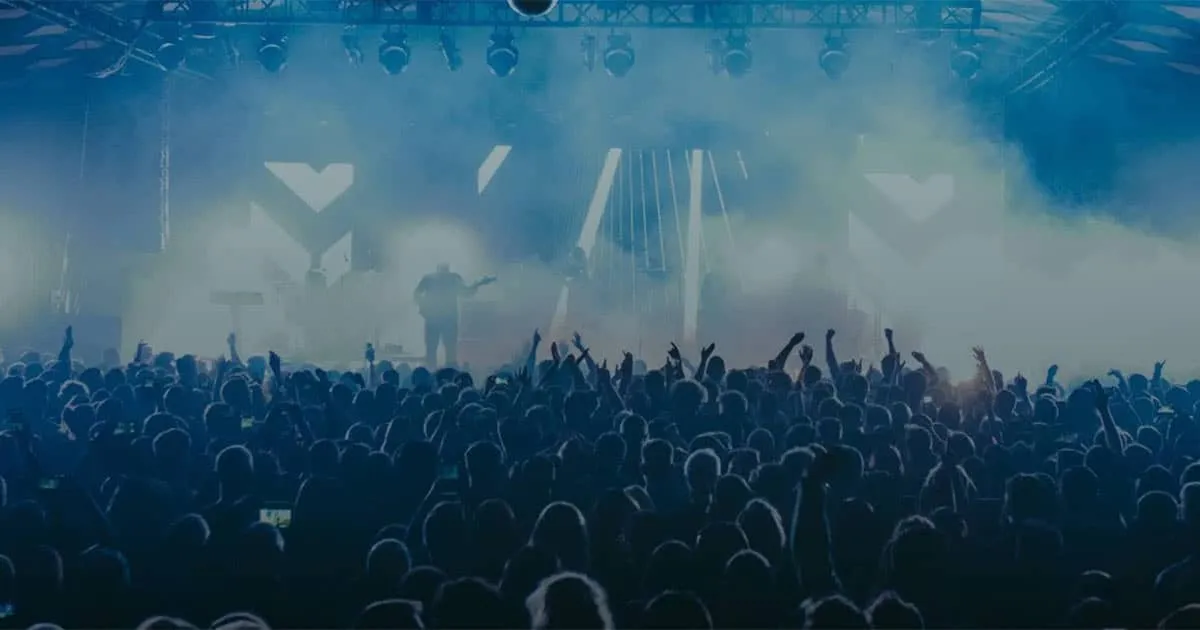 Photo: Barrowland Ballroom, via www.celticconnections.com
"Only other Belle and Sebastian fans would get it," she admits. "But that's kind of the point. It's like a secret handshake."
The trend towards subtle, insider references reflects how music tattoos have evolved beyond simple band worship. They've become a sophisticated form of cultural signalling, a way of broadcasting identity and finding tribe members in an increasingly fragmented musical landscape.
The Commitment Question
Of course, not everyone understands the appeal of permanent musical devotion. Critics argue that tastes change, that what seems profound at 20 might seem embarrassing at 40. But speak to anyone with music ink, and they'll tell you that's missing the point entirely.
"I don't have this because I think The Smiths are objectively the best band ever," says Marcus Wright, whose entire left arm is dedicated to Morrissey lyrics. "I have it because The Smiths got me through being a weird, lonely teenager in a small Yorkshire town. That's not going to stop being true just because I'm 35 now."
The permanence, rather than being a drawback, becomes part of the appeal. In an age of streaming playlists and algorithmic recommendations, music tattoos represent a rejection of disposable culture. They're a statement that some things – some songs, some moments, some feelings – deserve to be preserved in the most permanent way possible.
Living Galleries
As British music continues to evolve, so does the tattoo culture surrounding it. Tommy Henderson reports increasing requests for grime artists, indie folk lyrics, and even QR codes that link to specific songs. The art form is adapting to new musical movements while maintaining its core function as a bridge between sound and identity.
Perhaps most tellingly, very few people with music tattoos express regret. Even when tastes change or relationships end, the ink remains a honest record of who they were and what mattered to them at a specific moment in time.
As Sarah Collins puts it, adjusting her sleeve over the Joy Division waves: "Your body tells the story of your life anyway – scars, wrinkles, all that. I'd rather it told the story I chose, with the soundtrack I picked. Every time I look at this, I remember exactly how it felt to be seventeen and hear 'Love Will Tear Us Apart' for the first time. That's worth a bit of pain."