The Unsung Architects
In a cramped music room at Blackwood Comprehensive in South Wales, Mrs. Eleanor Davies spotted something special in a gangly 14-year-old who couldn't afford proper guitar lessons. Thirty years later, that student headlines festivals across Europe. He still sends Christmas cards to his old teacher, crediting her with everything that followed.
 Photo: Blackwood Comprehensive, via pbs.twimg.com
This story isn't unique. Across Britain, ordinary secondary schools once served as unlikely incubators for musical talent, powered by teachers who saw potential where others saw problems. These educators—often working with laughably small budgets and ageing equipment—shaped the musicians who would define British popular culture for decades.
Yet their legacy faces extinction as arts funding disappears and music education becomes a luxury rather than a birthright.
The Golden Era
Between the 1960s and 1990s, British secondary schools enjoyed what many consider a golden age of music education. The post-war optimism about comprehensive education coincided with cultural shifts that elevated popular music from mere entertainment to legitimate art form.
"We had this window where anything seemed possible," recalls Michael Pemberton, who taught at Manchester's Abraham Moss High School during the 1970s. "Kids were listening to The Beatles and Pink Floyd, and suddenly pop music was something you could study seriously."
 Photo: Abraham Moss High School, via abrahammoss.co.uk
These teachers didn't just teach scales and theory—they recognised that music education needed to reflect students' actual interests. They incorporated rock, folk, and jazz into curricula designed around classical traditions. They formed school bands that played lunch-time concerts and entered local competitions.
Most importantly, they spotted talent in unlikely places: the kid drumming on desks, the shy girl humming complex melodies, the troublemaker who transformed when handed an instrument.
Beyond the Curriculum
The impact of dedicated music teachers extended far beyond formal lessons. Many stayed after hours to run clubs, organise concerts, and provide individual coaching that cash-strapped families couldn't afford privately.
"Mr. Thompson basically ran a youth centre disguised as a music department," remembers Sarah Collins, now a professional violinist with the BBC Symphony Orchestra. "His classroom was open every lunch break, every evening until six. He'd teach anyone who wanted to learn, whether they were in his classes or not."
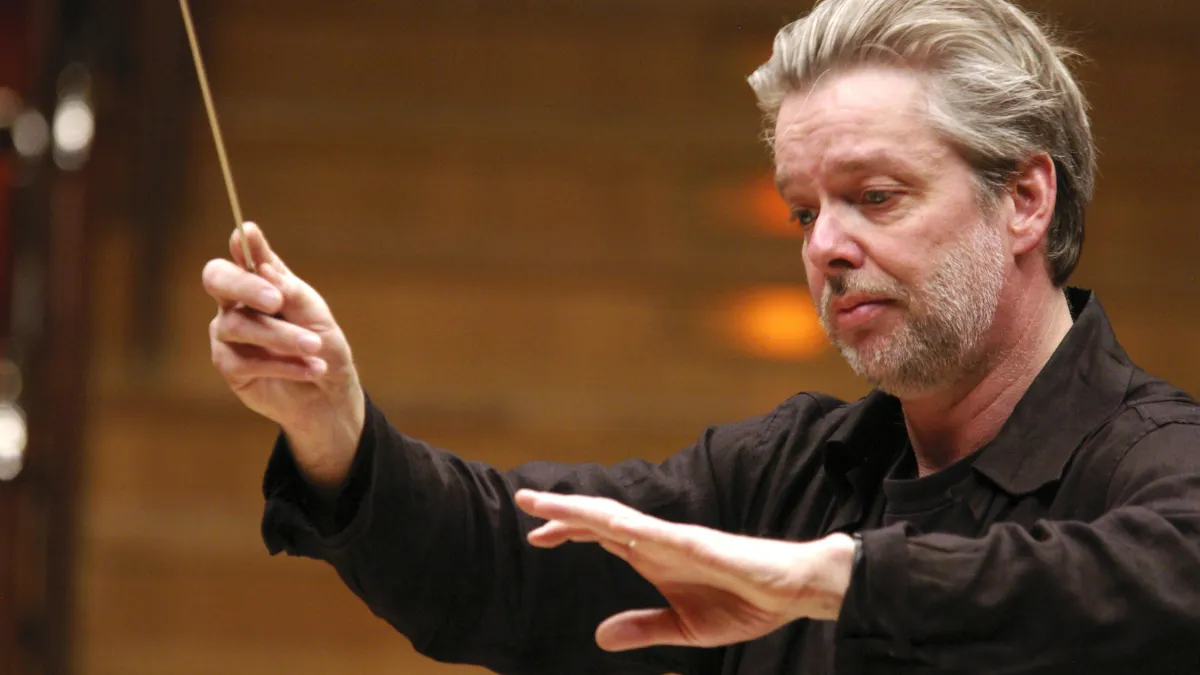 Photo: BBC Symphony Orchestra, via www.thetimes.com
These teachers often spent their own money on equipment and sheet music. They transported students to competitions in their personal cars and attended weekend workshops to stay current with musical developments. Their dedication was total, their rewards largely intangible.
David Hartwell taught at three London comprehensives between 1968 and 2003. His filing cabinets contain hundreds of letters from former students: session musicians, music teachers, sound engineers, and several whose names appear on platinum albums.
"I never set out to create rock stars," he explains. "I just wanted kids to experience the joy of making music together. Some happened to be exceptionally gifted."
The Resource Miracle
What these teachers achieved with limited resources borders on miraculous. School music departments operated on budgets that wouldn't cover a single professional instrument today. Teachers became masters of improvisation, repairing broken equipment with ingenuity and determination.
"Our piano was held together with superglue and prayer," laughs Janet Morrison, who taught at Coventry's Foxford School throughout the 1980s. "The drum kit was a collection of mismatched pieces donated by local bands. But we made it work because the kids deserved music education regardless of the school's budget."
Many teachers supplemented official resources through personal networks. They contacted local musicians, borrowed instruments from music shops, and organised fundraising concerts. Some even taught themselves new instruments to expand what they could offer students.
This resourcefulness created a particular approach to music education: pragmatic, inclusive, and focused on creativity over perfection. Students learned that making music was more important than having the best equipment—a lesson that served many well in their later careers.
The Cultural Impact
The influence of these school music programmes on British culture cannot be overstated. Musicians who emerged from comprehensive schools didn't just join the industry—they transformed it. They brought different perspectives, different sounds, and different approaches to songwriting and performance.
"Grammar school kids went to university and studied music formally," observes music journalist Tony Wilson. "But comprehensive school kids learned to play by ear, to improvise, to make do. That's where British rock's distinctive sound came from—that combination of raw talent and formal training."
The punk movement, in particular, owed much to comprehensive school music education. Teachers who encouraged experimentation and self-expression inadvertently fostered the DIY attitude that defined the genre. Students learned that you didn't need expensive training or perfect technique to make meaningful music.
Even in genres requiring formal training, comprehensive school teachers provided crucial early guidance. Many orchestral musicians, opera singers, and classical composers trace their initial inspiration to secondary school music rooms.
The Slow Strangulation
The decline began gradually in the 1990s as education policy shifted toward measurable outcomes and standardised testing. Music education, with its subjective assessments and long-term benefits, became vulnerable to budget cuts.
"First, they reduced our hours," explains Patricia Webb, who retired from teaching in 2018 after 35 years. "Then they cut instrument budgets. Eventually, they questioned whether we needed a full-time music teacher at all."
The introduction of league tables intensified pressure on schools to focus on subjects that directly impacted rankings. Music, along with other arts subjects, was increasingly viewed as a luxury that high-achieving schools could maintain but struggling institutions couldn't afford.
Many experienced teachers left the profession, frustrated by diminishing resources and reduced support. Younger teachers, facing student debt and low starting salaries, increasingly avoided music education for more financially secure careers.
The Modern Reality
Today's secondary school music education bears little resemblance to its predecessor. Many schools offer only basic music appreciation classes, if any musical instruction at all. Instrument lessons, once standard, have become optional extras that many families cannot afford.
"We're creating a musical apartheid," warns Dr. Susan Mitchell of the Music Education Council. "Middle-class kids get private lessons and attend specialist schools. Working-class kids get nothing, or next to nothing."
The consequences extend beyond individual disappointment. Britain's music industry increasingly draws talent from privileged backgrounds, losing the diversity that once made it globally distinctive. The rough edges and authentic voices that characterised British popular music risk being polished away by exclusively formal training.
Some schools maintain strong music programmes through exceptional leadership or wealthy parent bodies, but these become islands of excellence in a desert of diminished opportunity.
The Fight Back
Not everyone accepts this decline as inevitable. Some schools have found innovative ways to maintain music education despite reduced budgets. They partner with local music venues, invite professional musicians as guest teachers, and use technology to expand their reach.
The Rhythm and Beats programme in Birmingham connects secondary schools with local hip-hop artists, providing culturally relevant music education that engages students who might otherwise show little interest. Similar initiatives across the country demonstrate that creative approaches can overcome resource limitations.
"You have to adapt or die," explains programme coordinator James Patterson. "We can't recreate the 1970s, but we can find new ways to give kids access to music education."
Some retired teachers have become volunteers, offering their expertise to schools that can no longer afford full-time music staff. Their dedication continues, even without salaries or official recognition.
The Unfinished Symphony
The story of Britain's school music teachers represents both triumph and tragedy. These educators achieved extraordinary things with minimal resources, shaping not just individual lives but entire cultural movements. Their legacy lives on in the musicians they inspired and the audiences those musicians continue to reach.
Yet their work remains unfinished. Every year that passes without adequate music education in British schools represents lost potential—voices that will never find their full expression, creativity that will never flourish, communities that will never experience the transformative power of shared musical experience.
The teachers who tuned a generation proved that musical talent exists everywhere, waiting to be discovered and nurtured. Whether future generations receive the same opportunity depends on choices being made today in education departments and school board meetings across the country.
As Mrs. Davies from Blackwood Comprehensive often told her students: "Music isn't about having the best instruments or the most expensive training. It's about having someone who believes in you and gives you a chance to find your voice."
That belief, and those chances, are what Britain's schools risk losing forever.