When Music Had Faces: The Enduring Magic of Album Artwork in Britain's Visual Culture
Picture this: you're thirteen years old, clutching your pocket money, standing in the record section of your local HMV. Your eyes scan the racks, and suddenly a cover stops you cold. Maybe it's the haunting emptiness of Joy Division's 'Unknown Pleasures', or the surreal collage chaos of The Beatles' 'Sgt. Pepper's'. Before you've heard a single note, the artwork has already told you a story, promised you an experience, invited you into a world.
That moment—that crucial first visual encounter—is becoming increasingly rare in our streaming age. But it shouldn't be forgotten, because album artwork isn't just decoration. It's cultural DNA, visual storytelling, and often the first handshake between artist and audience.
The Golden Age of British Album Design
Britain has always punched above its weight when it comes to album artwork, largely because we've never been afraid to treat musicians as multimedia artists. The tradition stretches back to the early days of LP records, but it truly exploded in the 1960s when artists began viewing album covers as canvases rather than mere packaging.
Peter Blake's iconic 'Sgt. Pepper's Lonely Hearts Club Band' sleeve didn't just capture the zeitgeist—it helped create it. The cover became as famous as the music itself, spawning countless imitations and establishing the template for conceptual album design. Blake understood something fundamental: the visual and auditory should be inseparable partners, each enhancing the other's impact.
Then came the 1970s, and with it, Storm Thorgerson and his colleagues at Hipgnosis. Working primarily with Pink Floyd, Led Zeppelin, and Genesis, Thorgerson created images that were simultaneously beautiful and unsettling, familiar and alien. His work proved that album covers could be fine art in their own right—surreal landscapes that matched the ambitious scope of progressive rock.
'The Dark Side of the Moon's' prism became one of the most recognisable images in popular culture, transcending music to become a symbol of creative ambition itself. These weren't just album covers; they were cultural artifacts that helped define entire generations.
The Craft Behind the Vision
Speak to any veteran album designer, and they'll tell you that creating great cover art is about much more than making something that looks cool. It's about distilling hours of music into a single, powerful visual statement. It's about understanding not just what the music sounds like, but what it feels like, what it aspires to be.
Vaughan Oliver, who designed sleeves for 4AD throughout the label's golden period, approached each project like a detective solving a visual puzzle. His work for bands like Cocteau Twins and Dead Can Dance created an entire aesthetic language—dreamy, ethereal, slightly gothic—that became synonymous with a particular strain of British alternative music.
The process was intensely collaborative. Artists would spend hours with designers, playing rough mixes, discussing concepts, sharing reference points from literature, film, and art. The result was artwork that felt genuinely connected to the music, not slapped on as an afterthought.
Modern designers like Jonathan Barnbrook, who's worked with David Bowie and Suede, continue this tradition of deep artistic collaboration. Barnbrook's work on Bowie's final albums, 'The Next Day' and 'Blackstar', proved that album artwork could still surprise, provoke, and move people in the digital age.
The Digital Dilemma: When Art Becomes Thumbnails
Here's the uncomfortable truth: most people now experience album artwork as a tiny square on their phone screen, roughly the size of a postage stamp. The intricate details, the subtle colour gradations, the carefully chosen typography—much of it simply disappears at that scale.
This isn't just an aesthetic loss; it's a cultural one. Album artwork has always been about creating a complete sensory experience, something you could hold, examine, and live with. The large format allowed for hidden details, liner notes, credits, and often additional artwork on the back and inner sleeves. It was a package deal, literally and figuratively.
Streaming services have tried to address this by allowing users to click through to larger images, but let's be honest—how often do we actually do that? The ritual of studying an album cover while listening to the music for the first time has largely vanished, replaced by the convenience of instant access.
Some artists have adapted by creating artwork that works at thumbnail size—bold, simple designs with strong colours and clear focal points. But something irreplaceable has been lost in translation.
The Vinyl Revival: Large Format Art Returns
There's hope, though, and it comes from an unexpected source: vinyl records. The format that was supposed to be dead and buried has experienced an extraordinary renaissance, driven partly by sound quality concerns but equally by the desire for a complete artistic experience.
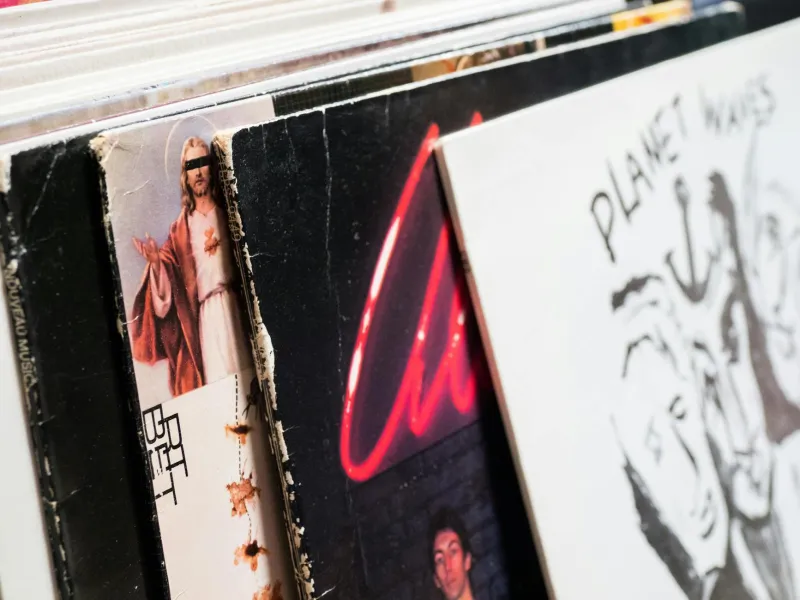
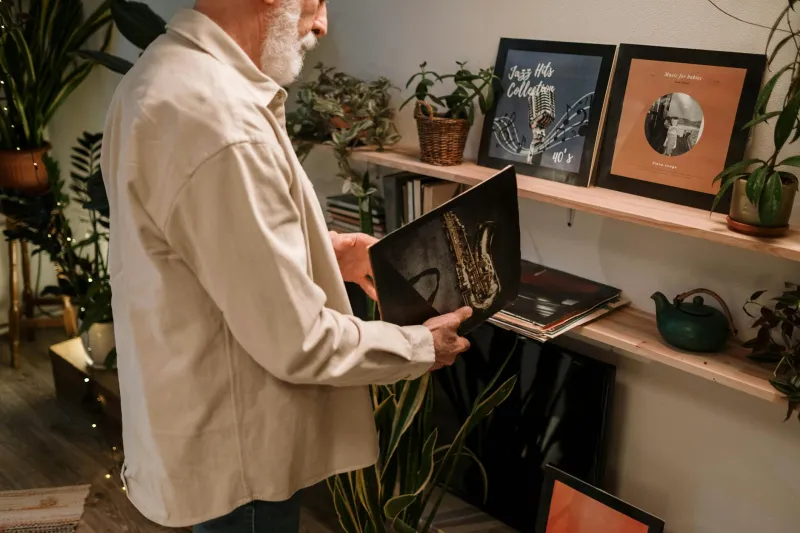
Walk into any record shop in London, Manchester, or Edinburgh today, and you'll see customers of all ages carefully examining album covers, reading liner notes, and treating records as the art objects they've always been. The 12-inch format gives designers the space they need to create something truly impactful.
This revival has encouraged both established and emerging artists to invest in high-quality artwork again. Bands like Arctic Monkeys, Foals, and Radiohead continue to commission striking visual work that enhances their musical statements. The knowledge that their art will be seen and appreciated at full size has reinvigorated the entire field.
Independent record labels have been particularly creative in this space, often commissioning local artists and designers to create limited edition sleeves that become collectibles in their own right. The result is a thriving ecosystem where visual art and music support each other commercially and creatively.
Collectors and Guardians of Visual History
Across Britain, a dedicated community of collectors and archivists work to preserve the history of album artwork. These aren't just music fans; they're custodians of visual culture, ensuring that important design work doesn't disappear into digital obscurity.
Record fairs in cities like Birmingham and Leeds have become meeting points for people who understand that album covers are historical documents, capturing not just musical moments but entire aesthetic movements. The prices that original Blue Note sleeves or early Factory Records releases command reflect their status as genuine art pieces.
Museums and galleries have begun to recognise this cultural value too. Exhibitions of album artwork now appear regularly in British institutions, treating these commercial designs with the same respect traditionally reserved for fine art. The V&A's collection includes hundreds of significant album covers, acknowledging their role in shaping British visual culture.
The Future of Musical Visual Identity
So where does this leave us? Album artwork isn't dead, but it's certainly transformed. Today's designers must think across multiple formats and platforms, creating visual identities that work equally well on vinyl, streaming services, and social media.
The most successful contemporary artists understand this challenge and embrace it. They're creating visual ecosystems rather than single images—artwork that extends across multiple touchpoints, from album covers to merchandise to stage design to social media content.
What remains constant is the fundamental truth that great music deserves great visual representation. Whether it's a 12-inch sleeve you can lose yourself in or a perfectly crafted thumbnail that stops your thumb mid-scroll, the marriage of sound and vision continues to define how we experience music.
The artists, designers, and collectors who keep this tradition alive aren't just preserving the past—they're ensuring that future generations will understand that music isn't just something you hear. At its best, it's something you see, feel, and live with. And that's worth fighting for, one beautiful album cover at a time.