The Sound of Saturday Night
Picture this: a crowded pub on a Saturday evening, smoke hanging thick in the air, and someone's just started "Danny Boy" at the piano. Within moments, the entire room has joined in—voices rough from ale and honest work, harmonising with an instinct that seemed bred into British bones. This wasn't entertainment; this was communion.
That scene, once as predictable as last orders, has virtually vanished from modern Britain. The pub singalong—spontaneous, inclusive, and utterly democratic—has become a cultural casualty of our increasingly connected yet isolated age.
From Music Hall to Local
The tradition traces its roots to Victorian music halls, where audiences were expected to participate rather than passively consume. Songs like "Knees Up Mother Brown" and "Maybe It's Because I'm a Londoner" were designed for group singing, with simple melodies and repetitive choruses that even the tone-deaf could manage.
"The music hall was Britain's first mass entertainment," explains Dr. Patricia Wellcome, author of 'Voices from the Tap Room'. "But unlike modern entertainment, it was participatory. The audience was part of the show."
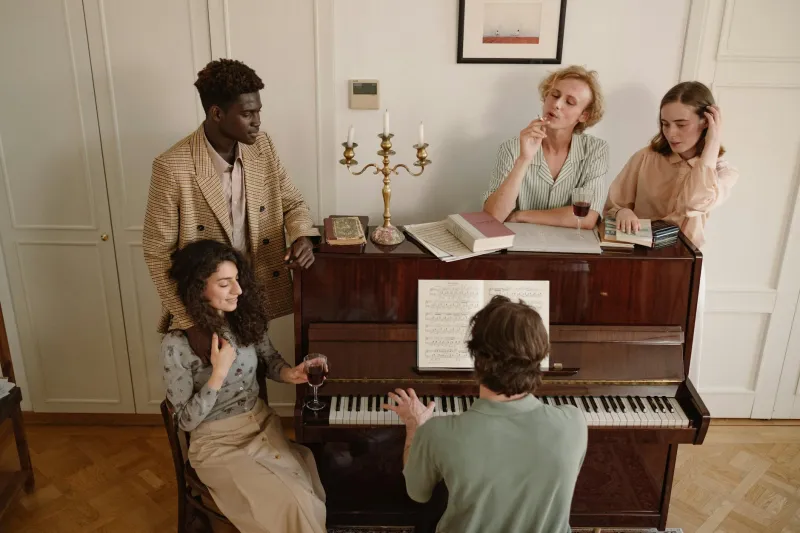
This participatory spirit migrated naturally to pubs, where pianos became focal points for community gathering. By the 1950s, most British pubs featured a piano—often an ancient upright that had seen better decades—and someone who could bash out the classics.
George Hartwell, 78, remembers those evenings at The Crown in Bermondsey: "Friday nights, you couldn't move for people. Old Ted would start playing, and before you knew it, everyone was singing. Didn't matter if you had a voice like a rusty gate—everyone joined in."
 Photo: The Crown, via walker-books-uk.imgix.net
The Democracy of Song
What made pub singalongs special wasn't musical excellence but social inclusion. Unlike formal choirs or concert halls, these gatherings welcomed everyone. The repertoire was deliberately accessible: wartime favourites like "We'll Meet Again," music hall standards like "My Old Man's a Dustman," and sentimental ballads that could reduce hardened dockers to tears.
"It was the one place where the bank manager and the bin man sang together," recalls Susan Fletcher, whose family ran three pubs in Yorkshire during the 1960s. "Class differences melted away when everyone was singing 'Lily the Pink.'"
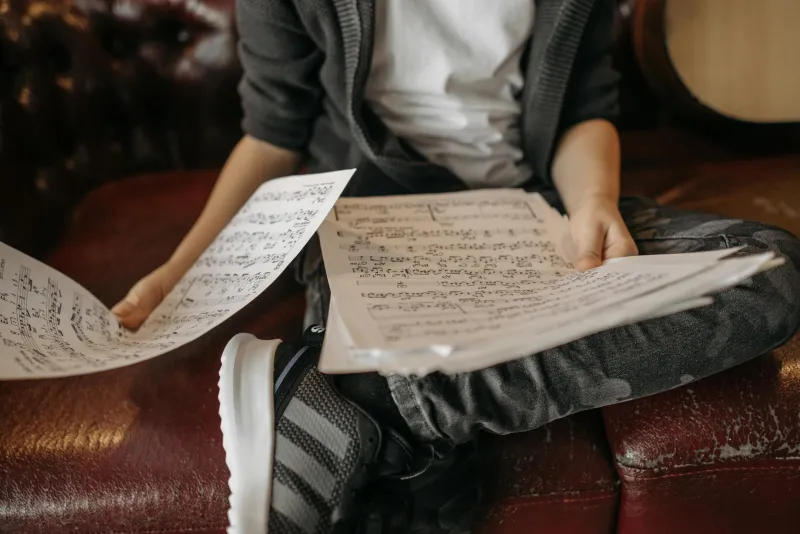
The songbooks—often dog-eared collections passed down through generations—reflected this democratic spirit. They mixed Cockney numbers with Irish ballads, Scottish reels with Welsh hymns, creating a truly British musical melting pot.
The Slow Fade
Several factors contributed to the tradition's decline. The smoking ban of 2007, while beneficial for public health, fundamentally changed pub atmospheres. The communal haze that once unified rooms gave way to cleaner but somehow colder environments.
Television played its part too. As screens multiplied in pubs, they competed with pianos for attention. Why sing when you could watch? The rise of background music—first jukeboxes, then digital playlists—meant pubs no longer needed live entertainment.
"Landlords started seeing pianos as wasted space," explains Martin Webb, who ran The Wheatsheaf in Birmingham for 30 years. "You could fit two more tables where the piano stood. Business logic, but something died when we moved it out."
 Photo: The Wheatsheaf, via static.wixstatic.com
Changing social habits accelerated the decline. Younger generations, raised on recorded music and individual playlists, felt less comfortable with communal singing. The songs themselves became dated, their references increasingly obscure to new audiences.
Echoes and Attempts
The tradition hasn't disappeared entirely. Some pubs maintain singalong nights, though these often feel forced rather than spontaneous. Holiday camps and cruise ships keep elements alive, but in sanitised, performance-oriented formats that lack the raw authenticity of the originals.
Occasional viral videos—usually featuring football crowds or wedding parties breaking into song—remind us of the power these moments still hold. But these feel like echoes rather than revivals, nostalgic glimpses of something we've lost.
Some enterprising landlords have attempted revivals. The Red Lion in Gravesend hosts monthly "Sing-Song Sundays," complete with an elderly pianist and photocopied songbooks. "It's mainly the over-60s," admits landlord Dave Morrison, "but they have a brilliant time. For three hours, it's 1962 again."
 Photo: The Red Lion, via c8.alamy.com
Digital Discord
Modern technology seems antithetical to spontaneous singing. Where pub-goers once relied on collective memory and shared songbooks, today's punters expect instant access to any song ever recorded. Karaoke machines attempted to bridge this gap but created performance anxiety rather than community participation.
"Karaoke made singing individual," observes ethnomusicologist Dr. James Crawford. "You perform for others rather than with them. It's the opposite of what made pub singalongs special."
Social media offers tantalising glimpses of what we've lost. Videos of Irish pub sessions or football crowd chants rack up millions of views, suggesting deep hunger for communal musical experiences. Yet these remain vicarious pleasures—we watch others singing together while sitting alone with our screens.
The Harmony We've Lost
Beyond nostalgia, the decline of pub singalongs represents something deeper: the erosion of shared cultural reference points. Those songbooks contained the DNA of British popular culture—music hall ditties, wartime anthems, comedy songs that everyone knew.
"When everyone knows the same songs, you have cultural cohesion," argues Dr. Wellcome. "Today's musical landscape is infinitely diverse but also fragmented. We've gained choice but lost community."
The pub singalong was Britain's equivalent of American campfire songs or Italian street serenades—a tradition that bound communities together through shared musical memory. Its loss reflects broader changes in how we socialise, entertain ourselves, and relate to each other.
Finding Our Voice Again
Can the tradition return? Some signs offer hope. The popularity of music festivals suggests appetite for communal musical experiences. Choir membership has grown, particularly among younger demographics seeking social connection. Even karaoke has evolved, with group-singing formats becoming more popular.
"The desire to sing together hasn't disappeared," believes Morrison from The Red Lion. "People just need permission and opportunity."
Perhaps revival requires adaptation rather than recreation. New songbooks mixing classic standards with modern anthems everyone knows. Acoustic sessions that encourage participation rather than passive listening. Events that recapture the spontaneous, inclusive spirit without slavishly recreating the past.
The pub singalong may seem like quaint history, but its essence—the human need to raise voices together in celebration, sorrow, and solidarity—remains eternal. Whether Britain can find new ways to satisfy that need will determine if future generations experience the magic of truly communal music-making, or if they'll only know it through faded recordings of voices that once filled rooms with harmony.