The Sound of Saturday Night
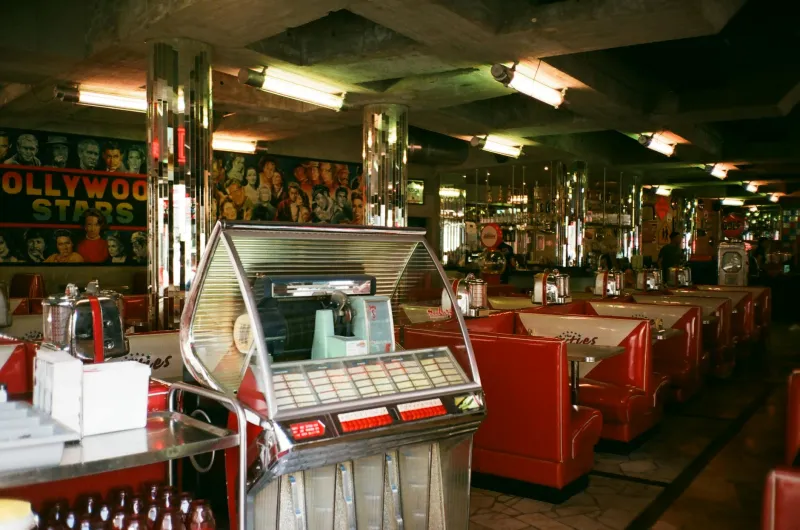
Walk into The Crown & Anchor in Portsmouth on any given evening, and you'll hear something increasingly rare in modern Britain: the mechanical whir of a proper jukebox followed by the opening chords of "Sweet Caroline." The pub's regulars don't just tolerate the music – they've curated it, feeding pound coins into the Wurlitzer like offerings to a shrine.
"That machine's been here longer than most of the furniture," laughs landlord Dave Mitchell, pulling a pint whilst Neil Diamond croons through speakers that have seen better decades. "When people ask me about renovating, I tell them they can paint the walls, change the carpets, even replace the bar – but that jukebox stays."
The Crown represents something precious and precarious: a surviving member of Britain's once-thriving ecosystem of music pubs. These weren't concert venues in any formal sense, but rather spaces where sound became community, where the right song at the right moment could transform a Tuesday evening into something magical.
More Than Background Noise
Britain's music pub culture peaked somewhere between the mid-1970s and early 1990s, when nearly every neighbourhood local had its sonic identity. Some built their reputation around jukeboxes stuffed with everything from Motown classics to the latest chart-toppers. Others carved out niches – the folk pub with its corner stage, the rock boozer where bands would set up behind the bar, the reggae joint where sound systems ruled supreme.
"It wasn't just about having music," explains cultural historian Dr. Sarah Pemberton, who's spent years documenting Britain's pub heritage. "These places created micro-scenes. You'd have your jazz pub, your northern soul venue, your indie hangout. The music wasn't background – it was the pub's personality."
At The Lamb & Flag in Welshpool, that personality manifested through decades of live music. Every Thursday, the pub's back room would transform into an intimate venue where local bands cut their teeth alongside touring acts looking for an authentic crowd. The stage was nothing more than a raised platform, the PA system held together with gaffer tape and hope, but the atmosphere was electric.
"We had everyone from teenage garage bands to proper touring acts," recalls former landlady Margaret Williams, now in her seventies. "The room only held about sixty people, but when it was full and the music was right, it felt like the centre of the universe."
The Slow Fade
That universe has been shrinking for decades. Rising business rates, stricter noise regulations, and the smoking ban have all taken their toll on traditional pub culture. But music pubs face additional pressures: licensing fees for live entertainment, complaints from new residential developments, and the simple economics of keeping a jukebox stocked and serviced.
The numbers tell a stark story. According to the Campaign for Real Ale, Britain loses around 50 pubs every month. Among music venues specifically, Music Venue Trust reports that grassroots spaces are closing at an even faster rate, with many traditional pub venues simply unable to adapt to modern regulatory requirements.
"The irony is that these places were doing what everyone says they want now – supporting live music, building communities, giving people reasons to come together," says Tom Clarke, who runs what might be one of Britain's last proper jukebox pubs in Stockport. "But it's easier to turn them into flats or Tesco Express stores."
The Red Lion in Avebury managed to survive longer than most, hosting live folk sessions well into the 2010s. The pub sat in the shadow of ancient stone circles, creating an almost mystical atmosphere when acoustic guitars joined voices in traditional songs. But even this magical combination couldn't overcome the mathematics of modern hospitality.
Keepers of the Flame
Yet pockets of resistance remain. The aforementioned Crown & Anchor continues its jukebox tradition, whilst places like The Musician in Leicester have adapted by embracing both heritage and innovation – keeping their vintage sound system whilst adding craft beer taps and artisanal food menus.
"You can't just rely on nostalgia," admits Mitchell. "But you don't have to abandon everything that made these places special either. Our jukebox brings in people who remember when every pub had one, and their kids who've never seen anything like it."
Some venues have found new life through careful curation. The Phoenix in Oxford transformed from a struggling local into a destination by programming everything from experimental jazz to indie folk, proving that music pubs can still find audiences when they offer something genuinely distinctive.
The Echo of What Was
Perhaps what's most striking about visiting these surviving music pubs is how they function as time capsules. The songs remain the same – "Don't Stop Me Now," "Mr. Blue Sky," "Come on Eileen" – but their context has shifted. Where once these tracks provided the soundtrack to regular community gatherings, now they serve as monuments to a different kind of social life.
"Every song tells a story about this place," reflects Crown regular Janet Thompson, who's been drinking here for thirty years. "That's my wedding song, that one reminds me of my dad, that track was playing when I met my husband at the bar. The jukebox isn't just playing music – it's playing memories."
Tomorrow's Soundtrack
As Britain's music pub tradition fades, something irreplaceable disappears with it. These weren't just businesses but cultural institutions, spaces where music lived and breathed as part of daily life rather than as ticketed entertainment. They democratised music consumption, allowing anyone with pocket change to DJ for a room full of strangers.
The survivors adapt as they can, but they're fighting against forces larger than changing musical tastes or drinking habits. They're battling a fundamental shift in how we experience both music and community – one that values convenience over character, efficiency over atmosphere.
Yet every time someone drops a pound coin into The Crown's jukebox and watches the mechanical arm select their chosen single, they're participating in something profound: keeping alive a tradition that once made every neighbourhood pub a potential venue, every regular a potential curator, and every evening a potential soundtrack to someone's story.
The music might be fading, but in the right light, with the right song playing, you can still hear the echo of what once was – and perhaps catch a glimpse of what might still be saved.