After Last Orders: The Quiet Death of Britain's After-Hours Music Sessions
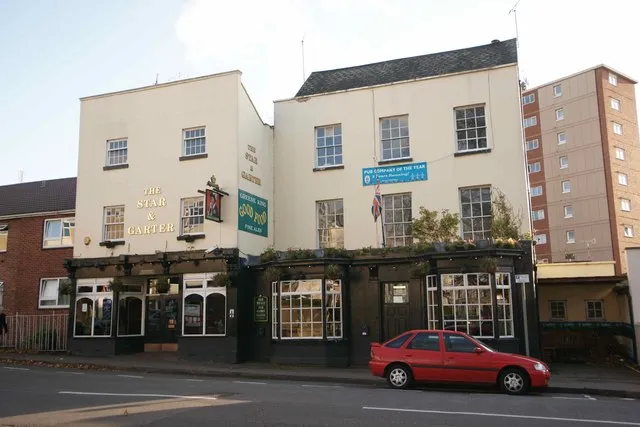
Photo: Colin Craig, CC BY-SA 2.0, via Wikimedia Commons
After Last Orders: The Quiet Death of Britain's After-Hours Music Sessions
It always started the same way. The last punters would drift out, someone would click the bolt on the front door, and the landlord — if he was the right kind of landlord — would quietly refill a few glasses and nod towards the back room. Instruments would appear from cases nobody had noticed. Chairs would be pulled into a rough circle. And for the next two or three hours, something would happen that nobody planned, nobody recorded, and nobody quite knew how to explain afterwards.
This was the lock-in session. It wasn't a gig. It wasn't a rehearsal. It was something older than both — music made for the room, by people who needed to play, for an audience of other musicians who needed to listen. And it is, by almost every account from the people who lived it, disappearing.
What the Lock-In Actually Was
The term 'lock-in' carries a slightly illicit connotation — the idea of drinking after hours, of the landlord bending the rules for favoured regulars. In reality, the after-hours music session occupied a slightly different space. It was less about flouting licensing laws (though that was sometimes involved) and more about the fact that pubs, in their traditional form, provided a physical and social infrastructure for informal music-making that had no obvious equivalent anywhere else.
For folk musicians in particular, the session was the primary means by which the tradition reproduced itself. Tunes passed from player to player without sheet music, learned by ear in real time, corrected and refined over multiple encounters. A younger musician sitting in with more experienced players wasn't just having a nice evening — they were receiving an education that no conservatoire offered. The same was true in blues and jazz circles, where the informal late-night gathering was the space where vocabulary was absorbed, where you learned not just the notes but the feel.
'You couldn't learn what happened in those sessions from a book,' says one veteran folk fiddle player who spent the eighties and nineties in pubs across Yorkshire and Lancashire. 'You learned it by being in the room. By watching someone's bowing hand from six inches away. By playing the same tune twenty times until you stopped thinking about it and just played it.'
The Forces Squeezing It Out
The decline isn't the result of any single policy or cultural shift. It's a slow accumulation of pressures that have made the conditions for informal late-night music increasingly difficult to sustain.
Licensing reform, particularly the Licensing Act of 2003, changed the relationship between pubs and their local authorities in ways that made landlords more cautious about what happened on their premises after hours. The theoretical flexibility the Act introduced — later licences, more varied entertainment — came with increased scrutiny and paperwork that smaller venues found burdensome. Many simply stopped pushing their luck.
Then there are the neighbours. The transformation of town and city centres over the past two decades has brought residential development cheek-by-jowl with long-established pubs. The flat above the pub, the new-build conversion next door — they come with residents who didn't choose to live next to a music venue and aren't shy about making that clear. Noise complaints, even for relatively quiet acoustic music, carry genuine consequences for a licence holder who can't afford a legal battle.
And then there's the simple exhaustion of running a pub in 2024. Hospitality has been through the wringer — Brexit, Covid, the cost-of-living squeeze, the energy crisis. The landlords who once stayed up until two in the morning because they loved music and loved their regulars are running out of road. Many have already gone.
What the Room Gave That Nothing Else Can
Ask anyone who was a regular at these sessions what they miss most and the answer is rarely about the music itself, exactly. It's about the conditions that produced the music — the specific alchemy of a late hour, a trusted group, no audience, no performance anxiety, and no recording light blinking red.
'When you know nobody's watching, you take risks you wouldn't take on stage,' says one jazz pianist who came up through the session circuit in the North West. 'You try something that might fall apart. And sometimes it does fall apart, and everyone laughs, and then someone picks it back up and it becomes something else entirely. That process — that's where you actually develop as a musician. You can't fake it in a rehearsal room.'
The unrecorded nature of these sessions was both their limitation and their power. Nothing was preserved. Nothing was archived. The music existed entirely in the moment and in the memories of the people present. Which meant it was genuinely alive in a way that recorded music, for all its virtues, simply isn't.
Can Anything Replace It?
There are optimists who point to the growth of formal folk sessions in pubs — the kind advertised on a chalkboard, open to visitors, running to a schedule. These are valuable and, in many areas, thriving. But the people who knew the lock-in tradition are generally gentle but firm about the distinction. A scheduled session is a public event. It has an audience, an implicit structure, a level of self-consciousness that changes everything.
Others point to private house sessions — musicians gathering in living rooms, away from licensing and noise concerns altogether. These do happen, and some of the best informal music-making in Britain currently takes place in someone's front room rather than a pub back room. But the house session lacks the pub's particular quality of accidental community — the fact that you never quite knew who might turn up, that the mix of players was never entirely predictable.
The honest answer is that nothing fully replaces it because what it was cannot be designed or scheduled. It arose from a specific combination of architecture, culture, licensing tolerance, and human exhaustion — the kind of exhaustion that loosens inhibitions and makes people play honestly. Recreating those conditions in a world of noise-monitoring apps and digital licensing systems is, at best, an act of determined nostalgia.
The Last Landlords
There are still a handful of pubs — in rural Wales, in parts of Scotland, in corners of the North of England where the old culture has held on — where something like the lock-in session still quietly happens. The landlords who enable it tend to describe it in the same terms: a responsibility, a privilege, something they inherited from whoever ran the place before them and feel obliged to pass on.
'I know what I'm risking,' one such landlord told me, choosing his words carefully. 'But I also know what we'd be losing. And I'm not ready to be the one who lets that go.'
For now, at least, the bolt is still going on the door. The glasses are still being refilled. Somewhere, in a back room that smells of old wood and spilled beer, someone is playing the first few bars of a tune they learned thirty years ago from someone who learned it forty years before that.
And for a little while longer, the music lives.