Not Quite the Real Thing: Why Britain's Tribute Acts Deserve Far More Respect Than They Get

Not Quite the Real Thing: Why Britain's Tribute Acts Deserve Far More Respect Than They Get
Somewhere in a rehearsal room above a pub in Wolverhampton, a man who has spent fifteen years perfecting Freddie Mercury's stage presence is running through Don't Stop Me Now for the fourth time this afternoon. His timing is immaculate. His vocal control is genuinely impressive. His knowledge of the original recordings — the subtle variations between the studio version and the Wembley '86 live performance, the exact moment Mercury would hold a note half a beat longer than written — is encyclopaedic.
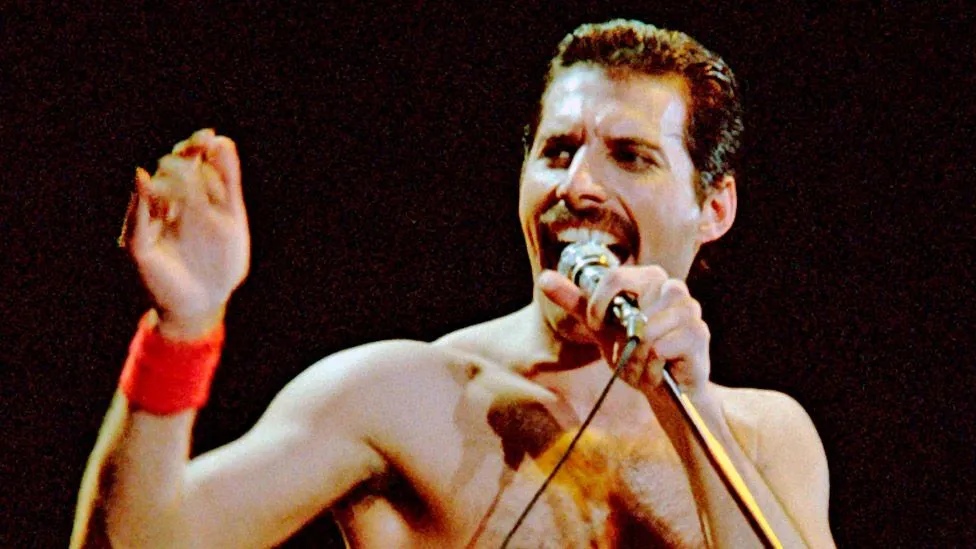 Photo: Freddie Mercury, via ichef.bbci.co.uk
He is not Freddie Mercury. He will never be Freddie Mercury. And he's made a decent living, raised a family, and given thousands of people some of the best nights of their lives anyway.
This is Britain's tribute circuit. And it is considerably more interesting, more skilled, and more culturally significant than its reputation suggests.
The Scale of the Thing
Let's start with the numbers, because they're genuinely startling. The UK tribute act industry is estimated to be worth somewhere north of £50 million annually, employing thousands of musicians, sound engineers, lighting technicians, costume designers, and tour managers. There are tribute acts performing every single night of the year across Britain, from Orkney to Cornwall, in venues ranging from village halls to the O2 Arena's indigo.
 Photo: O2 Arena, via www.seatingplan.net
And they are not, in the main, struggling. The most successful tribute acts — the ones fronting productions of Abba, Queen, Pink Floyd, or the Beatles — routinely sell out 2,000-capacity theatres on national tours. Some of those shows gross more per night than a mid-level original artist could dream of. The audience is there. The appetite is enormous. The economics work.
What hasn't kept pace is the cultural conversation around what tribute acts actually do and what it takes to do it well.
The Craft Behind the Copy
The lazy assumption is that tribute work requires nothing more than learning the songs and acquiring a vaguely similar haircut. Talk to anyone actually doing it and you'll get a very different picture.
Gemma, who fronts a Blondie tribute based in the Midlands, trained as a classical vocalist before spending two years methodically deconstructing Debbie Harry's phrasing, posture, and approach to microphone technique. "People think you just sing the songs," she says. "But you're also studying someone's physicality, their relationship with the audience, the way they hold space on a stage. It's more like acting than most people realise."
For bands replicating complex studio productions — think a Pink Floyd tribute attempting The Wall in its entirety — the technical demands are extraordinary. The arrangements have to be forensically accurate. The gear has to be right. The sequencing, the lighting cues, the spoken word passages — all of it has to land in the right place or the whole thing collapses. These are not casual weekend musicians. They are specialists.
There's also the matter of stamina. A successful tribute act might perform 150 nights a year. That's 150 nights of inhabiting someone else's stage persona, delivering someone else's emotional peaks, and then driving home at two in the morning before doing it again on Saturday.
The Identity Question
Here is where things get genuinely interesting, and occasionally uncomfortable. What does it do to a person to spend years, sometimes decades, building a career around someone else's identity?
The musicians who are most thoughtful about this tend to draw a distinction between performance and identity. The costume comes off. The persona stays in the van. The person who goes home is not Mick Jagger or David Bowie or Amy Winehouse — they are themselves, with their own life and their own interior world, and the show is a job rather than a transformation.
But the line can blur. There are stories — told with varying degrees of rueful humour — of tribute musicians who find it genuinely strange to listen to the original artist's music in a non-professional context, who feel a weird proprietary twitch when the real band releases something new, or who have to consciously resist the urge to correct people who describe the original as "better."
And then there are the cases where the original artist has died. Playing Bowie post-2016, playing Prince, playing Amy Winehouse — these carry a different emotional weight. The audience's investment is different. The grief is real. The tribute musician is, in some sense, a vessel for collective mourning as much as collective celebration.
The Audience That Shows Up
One of the things the mainstream music press persistently misses about the tribute circuit is the nature of the audience it serves. These are not people who can't afford to see the real thing. In many cases, these are people who can't see the real thing — because the original artist is dead, because the reunion tour sold out in four minutes, because the tickets cost £180 and the tribute costs £25, or simply because the tribute experience, in a mid-sized theatre with a bar and a seat and good sightlines, is more enjoyable than a stadium show where you're watching a dot on a screen.
There is also a significant accessibility dimension here. Older audiences, audiences with mobility issues, audiences outside the major cities — these groups are disproportionately well served by a tribute circuit that comes to them, that plays venues they can actually reach, that doesn't require a three-hour drive and a premium car park.
The tribute act, in this light, is not a second-best option. It is often the only option. And it is frequently a very good one.
Legitimate Art Form or Elaborate Cover Version?
The question of whether tribute performance constitutes genuine artistic expression is one that the musicians themselves tend to find both interesting and slightly exhausting. The honest answer is probably: it depends.
At its most perfunctory, tribute work is competent karaoke with better lighting. At its best, it is something more complex — a form of interpretive performance that requires deep musical knowledge, physical discipline, emotional intelligence, and the ability to serve an audience's nostalgia without condescending to it.
What it is, unambiguously, is a legitimate livelihood for thousands of skilled British musicians. And in an industry that has spent the last decade making it increasingly difficult for working musicians to earn a living, that's not nothing. That's actually quite a lot.