One More Time: The Unstoppable Rise of Britain's Reunion Concert Scene
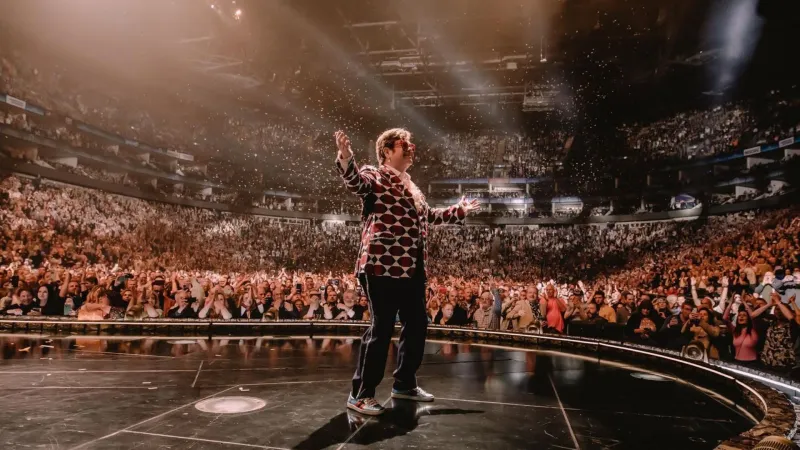
Photo: reunion concert crowd nostalgia UK arena live music, via images.prestigeonline.com
Somewhere in Britain right now, a band that broke up in 2003 is rehearsing in a room together for the first time in over two decades. They're older. Some of them are greyer. At least one of them has probably got a bad knee. The old tensions — the ones that drove them apart in the first place — are hovering somewhere just above the drum kit, unaddressed.
And yet they're here. Because the phone kept ringing. Because the offers kept coming in. Because, honestly, the money was too good to walk away from. And — though this part is harder to admit — because they miss it.
The reunion tour has become one of the defining features of British live music in the 2020s. It's not new, exactly — bands have been reforming for decades — but the scale and frequency of it has reached a point where it's reshaping the economics of the entire live sector.
The Numbers Don't Lie
Let's start with the commercial reality, because it explains a lot. Streaming has been, for most artists, a financial catastrophe. The royalty rates that seemed like a reasonable trade-off in the early days of Spotify have left many musicians from the nineties and 2000s — artists who sold millions of CDs at the height of their commercial success — earning a fraction of what those catalogue sales would once have generated.
Live music, by contrast, has never been more financially significant. And legacy acts have something that newer artists often can't match: a built-in audience of people who grew up with their music and who have, crucially, disposable income.
The maths is fairly straightforward. A band that was moderately successful in 1998 might have had a fanbase of a few hundred thousand people. Those people are now in their thirties, forties, and fifties. Many of them have families, mortgages, and careers — but they also have the money to pay £75 for a ticket to see a band they loved at university, and the emotional investment to make it feel worthwhile.
Promoters have cottoned on to this. The touring market for legacy acts in Britain has expanded dramatically over the last decade, with agents actively approaching bands who haven't performed in years — sometimes bands who'd publicly stated they'd never reform — with offers that are genuinely difficult to refuse.
The Nostalgia Factor
Money explains why the supply side is so robust. But what drives demand? Why are British audiences turning out in such numbers for bands they could, in theory, stream whenever they like?
Part of the answer is simply that recorded music and live music are different things. Seeing a band play in a room with other people who share your affection for them is an experience that streaming cannot approximate. The communal dimension of it — the shared memory, the collective recognition — is a significant part of what makes it compelling.
But there's something else going on too. The nineties and early 2000s occupy a peculiar place in British cultural memory. For a generation that came of age during Britpop, the Cool Britannia moment, and the early years of the internet, those years carry an emotional weight that's hard to overstate. The music from that period is tied to specific memories — first loves, university halls, summer festivals, the particular texture of being young in Britain at a specific historical moment.
Reunion tours offer something rare: a chance to step back inside that feeling, however briefly. The audience isn't just watching a band. They're revisiting a version of themselves.
What the Bands Say
Talk to the musicians involved and the picture is more complicated than pure nostalgia-for-hire. Many of them are genuinely ambivalent about the whole enterprise. There's the awkwardness of revisiting old conflicts. There's the question of whether they can still perform the material convincingly. There's the nagging worry about whether they're cheapening something that once meant a great deal.
But there's also, frequently, a genuine pleasure in it. The craft of live performance doesn't simply disappear. Musicians who've spent decades playing often find that they're technically better now than they were at the height of their original run — more controlled, more assured, more capable of delivering a consistent show every night.
Some reunions have produced genuinely exciting new music. Others have been content to serve the catalogue faithfully and let the audience have their moment. Both approaches can work, depending on what the band and the audience need from each other.
The Venues and the Promoters
From the perspective of UK venues and promoters, the reunion circuit has been a significant stabilising force in an industry still recovering from the financial damage of the pandemic years.
Legacy acts are, in commercial terms, a relatively safe bet. They come with a proven audience, a body of recognisable material, and a promotional story that's easy to tell. For mid-size venues — the 1,500 to 5,000 capacity rooms that form the backbone of Britain's live music infrastructure — a well-timed reunion tour can be exactly the kind of anchor booking that makes a season financially viable.
The risk, from the promoter's perspective, is misjudging the appetite. Not every band that was big in 1997 can fill a theatre in 2024. The market is more sophisticated than it might appear, and audiences are selective. A poorly judged reunion — one that feels cynical, or under-rehearsed, or simply too late — can damage a legacy rather than celebrate it.
The Bigger Picture
What the reunion circuit ultimately tells us is something about the relationship between music and memory, and about what audiences want from live performance in an era when recorded music is essentially free and infinitely available.
When everything is accessible at all times, scarcity acquires a new kind of value. Seeing a band that reformed for a limited run, in a room with other people who feel the same way you do about that music — that's something that can't be replicated or streamed or algorithm-generated.
Britain has always been good at this kind of cultural reclamation. At finding the value in things that seemed finished and giving them one more chapter.
So if you've got a ticket to see a band you loved twenty years ago and you're wondering whether it'll live up to the memory — it probably won't, exactly. But it might be something better. Something you didn't know you still needed.