Pressed for Time: The Small British Factories Keeping Vinyl Alive From the Inside Out
The Bit Nobody Talks About
Everyone loves a good vinyl comeback story. Sales figures get quoted, Record Store Day queues get photographed, and the warm crackle of analogue audio gets romanticised in think-pieces from here to Brooklyn. What rarely gets mentioned, though, is the industrial side of the equation — the hot, noisy, technically demanding process of actually turning raw PVC pellets into a twelve-inch disc that sounds any good.
Britain's independent record pressing scene is small, fiercely committed, and operating under conditions that would make most people reconsider their career choices. These aren't the big plants handling major label reissues. These are the operations that press five hundred copies of a debut EP for a band from Wolverhampton, or a limited run of seven-inches for a jazz label based above a Hackney café. They're the infrastructure the indie music world depends on — and most music fans have never given them a second thought.
Learning From Scratch (Again)
Here's the thing about vinyl pressing: the knowledge largely disappeared. When the CD gutted the industry in the late eighties and nineties, most pressing plants closed. Equipment sat idle, was sold off, or got scrapped. The people who understood the craft aged out of the industry. When demand came roaring back in the 2010s, the sector had to essentially rebuild itself from institutional memory that had become dangerously thin.
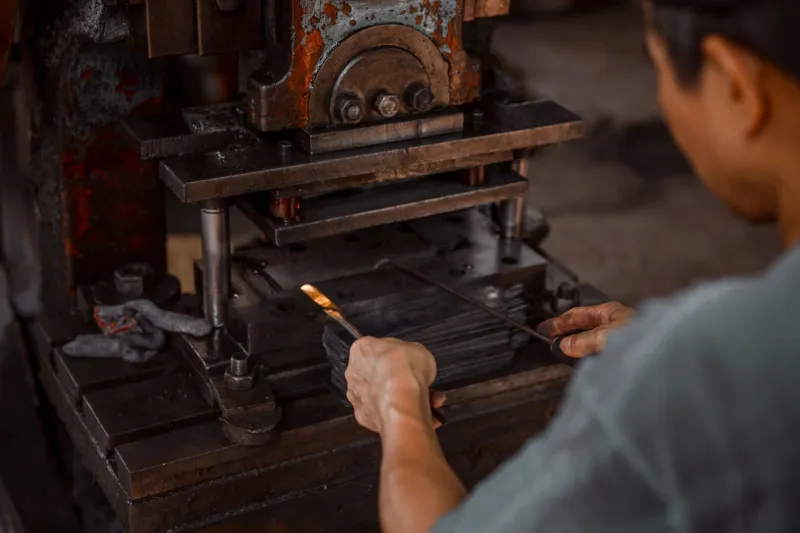
For smaller operators, that meant learning through doing — and making expensive mistakes. The machinery itself is unforgiving. Hydraulic presses, stampers, biscuits of molten PVC, temperature tolerances that have to be hit precisely or the whole run comes out warped or noisy. There's no YouTube tutorial that covers the half of it. Most of what small-scale pressers know, they've learned by talking to older engineers, reverse-engineering problems, and simply pressing a lot of bad records before they started pressing good ones.
That self-taught quality is, paradoxically, part of what makes independent pressing interesting. The people running these operations tend to be obsessives. They got into it because they cared about records, not because they spotted a commercial opportunity. That distinction matters enormously in terms of the quality and the commitment they bring to the work.
What 'Small Scale' Actually Means
In practical terms, independent pressing plants in Britain are operating with anywhere from one to a handful of presses, usually refurbished machines from the original era of mass vinyl production. Some have sourced equipment from defunct European plants. Others have had machines rebuilt from components. The presses themselves are old enough to have histories — passed from plant to plant, continent to continent, before landing in a unit on an industrial estate somewhere in the Midlands or the North.
Capacity is limited by design. A small plant might press a few thousand records a week at full tilt, which sounds reasonable until you consider that a single moderately successful crowdfunded album campaign might order that many in one go. The maths gets tight quickly.
That constraint forces these operations to be selective about who they work with, and to build genuine relationships with their clients. Many independent pressers have developed loyal rosters of labels and artists who come back repeatedly — not just because of price or turnaround, but because of trust. A small presser who knows your aesthetic, understands that your jazz recording needs a particular weight of vinyl, or that your punk band wants a specific colour run — that's worth something beyond the invoice.
The Craft That Hides in Plain Sight
Cutting the lacquer, plating the stampers, balancing the compound mix — each stage of vinyl production involves decisions that directly affect the final sound and feel of the record. Independent pressers often have far more direct involvement in those decisions than the larger plants, where the process is more automated and the communication more corporate.
Some smaller operations have developed reputations for specific qualities. A plant that's known for getting the low-end right on dance music. Another that handles delicate acoustic recordings with particular care. Word travels in the independent music world, and a presser who consistently delivers quality earns a reputation that no amount of marketing could manufacture.
There's also the visual side. Coloured vinyl, picture discs, splatter pressings — the decorative possibilities of the format have become a significant part of its appeal for collectors and fans. Managing those processes adds another layer of technical complexity, and getting it right takes experience and a certain amount of artistry.
Competing With the Giants
The awkward reality is that Britain's independent pressers are operating in a market partially dominated by large European plants — particularly in the Czech Republic and Germany — that can offer lower per-unit costs at scale. For a label ordering five thousand copies of a major release, the economics often point overseas.
Where the independents compete is on flexibility, communication, and the willingness to handle smaller runs without making clients feel like a nuisance. A band ordering three hundred copies of a debut single isn't going to get priority treatment from a massive pressing facility. At a small British plant, they might actually speak to the person running the machine.
There's also a growing appetite among artists and labels for UK-pressed records — partly for logistical reasons (avoiding shipping delays and import complications), partly for reasons of principle. The idea of keeping the production chain local, of supporting British manufacturing, resonates with a music community that's generally pretty attuned to questions of ethics and economics.
Still Here, Still Pressing
It would be easy to frame this as a precarious survival story, and in some respects it is. Margins are thin, equipment maintenance is expensive, and the unpredictability of demand makes planning difficult. But the people running these operations tend not to frame it that way themselves.
There's a stubborn pride in what they do. They're making physical objects that will outlast the people who made them. Records pressed in a workshop in Sheffield or Bristol this year might be playing on someone's turntable in forty years. That kind of permanence means something — especially in a music industry that increasingly treats everything as disposable and ephemeral.
The vinyl revival gets credited to nostalgia, to audiophiles, to the tactile appeal of sleeve art. All of that's true. But none of it happens without the people who actually know how to press the things — and in Britain, those people are quietly, stubbornly, still at work.