Read the Room: The Underestimated Craft of Britain's Wedding and Event DJs
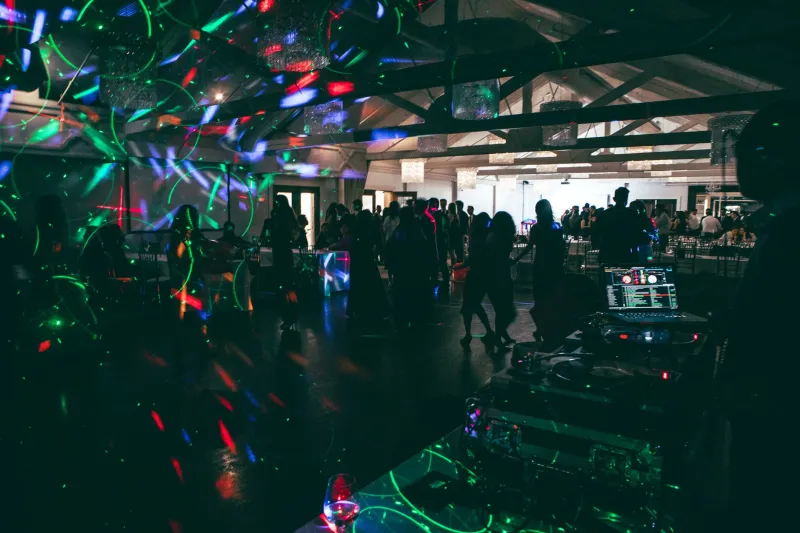
Somewhere in a function suite in the East Midlands right now, a DJ is doing something that looks deceptively simple. He's watching a room of 140 people — some dancing, some eating, some having an argument near the emergency exit — and making a split-second decision about what to play next. Not based on what he wants to hear. Not based on what was on the playlist he was sent three weeks ago. Based on what this specific group of people, in this specific emotional state, on this particular evening, needs to hear right now.
Get it right and the floor stays full until midnight. Get it wrong and forty people sit down at once and the atmosphere drains out of the room like bathwater. Nobody will know exactly why it happened. They'll just know the night went flat somewhere around half nine.
This is the job. And it's considerably harder than it looks.
The Invisible Architecture of a Good Night
Professional DJs working the UK wedding and corporate circuit operate in a world almost entirely invisible to the people who hire them. Clients see a laptop, some speakers and a bloke in smart-casual who plays songs. What they don't see is the months of preparation, the psychological profiling of guest demographics, the careful negotiation between what the couple wants and what will actually keep their elderly relatives and their student friends on the same dancefloor simultaneously.
The pre-event consultation process alone can take several hours. Good DJs ask questions that feel more like therapy than event planning. What does this celebration mean to you? What do you want people to feel when they walk in? Is there anyone who needs careful handling — a difficult family situation, someone who'll cause problems if the wrong song plays? What's the one track that absolutely cannot be played, and why?
That last question matters more than you'd think. Every experienced wedding DJ has a story about the song that seemed fine on paper and turned a room to ice because of an association nobody mentioned in the briefing. Music is emotional dynamite, and the people setting it off need to know where they're pointing it.
Managing the Chaos
Here's what the glossy wedding blogs don't tell you: a significant proportion of any wedding DJ's evening is spent managing requests from people who are, to varying degrees, drunk and absolutely convinced they know exactly what the room needs.
The request slip is both a blessing and a curse. It gives guests a sense of involvement and keeps them from repeatedly approaching the booth. It also generates a stack of contradictory demands that would be impossible to honour simultaneously even if every suggestion was a good idea, which they frequently aren't.
Navigating this requires a particular kind of social intelligence. You can't just ignore requests — that creates resentment and the impression of arrogance. You can't play everything — that way lies chaos. The skill is in making people feel heard while maintaining control of the room's emotional trajectory. A good DJ will find a way to play something for almost everyone, even if it's not quite what was asked for. The guest gets acknowledged. The dancefloor survives.
Then there are the more dramatic interventions. The best man who's had far too much and wants to make an announcement. The relative who's decided the music is too loud and is standing at the booth making this known at volume. The bride who's in tears for reasons unrelated to the playlist but needs the next song to pull her back into the room. DJs working this circuit develop a kind of frontline emotional resilience that most performers never need.
The Craft Behind the Console
It's worth being direct about something: there is genuine artistry in what the best DJs do, and the music industry's persistent snobbery about it is both wrong and boring.
Beatmatching, harmonic mixing, understanding the physics of a dancefloor — these are real technical skills that take years to develop properly. But the deeper craft is in the curation, and specifically in the ability to build and sustain emotional momentum across a three or four hour set that has to work for an enormously diverse audience.
A wedding crowd might span six decades of musical taste. The DJ's job is to find the connective tissue — the tracks that cross generational lines, the moments where different groups of guests suddenly find themselves in the same musical space. That's not a playlist. That's architecture.
The best practitioners talk about a dancefloor the way musicians talk about an instrument — something to be read, responded to, occasionally pushed against. You learn when to give the room what it expects and when to surprise it. You learn that the moment just before a crowd goes wild is as important as the moment itself. You learn that sometimes the most powerful move is to drop the energy deliberately, creating space for something bigger to land.
Respect Long Overdue
The British entertainment industry has a complicated relationship with its own hierarchy. Certain kinds of performance get taken seriously; others get filed under 'light entertainment' and quietly patronised. Wedding and event DJs have historically ended up firmly in the second category, despite the fact that they're often working harder, for longer, under more demanding conditions than many performers who get considerably more cultural credit.
That's starting to shift, slowly. The pandemic — which wiped out the events industry almost overnight — forced a wider conversation about the value of the people who make celebrations possible. When weddings came back, couples found that good DJs were booked out months in advance, that rates had risen, and that the professionals who'd survived had done so by being genuinely exceptional at something genuinely difficult.
The stereotype of the cheesy wedding DJ — all medallions and microphone patter — was always a caricature. The reality is a profession full of people who care deeply about music, who've spent years developing their craft, and who take enormous pride in creating moments that people will remember for the rest of their lives.
Next time you're on a dancefloor at a wedding, look over at the booth. The person standing there isn't just pressing play. They're watching everything, feeling the room, making a hundred micro-decisions you'll never be aware of. And if the night is going brilliantly, that's almost certainly why.