Four Walls and a Dream: The Garages, Church Halls and Garden Sheds Keeping Britain's Bands Alive
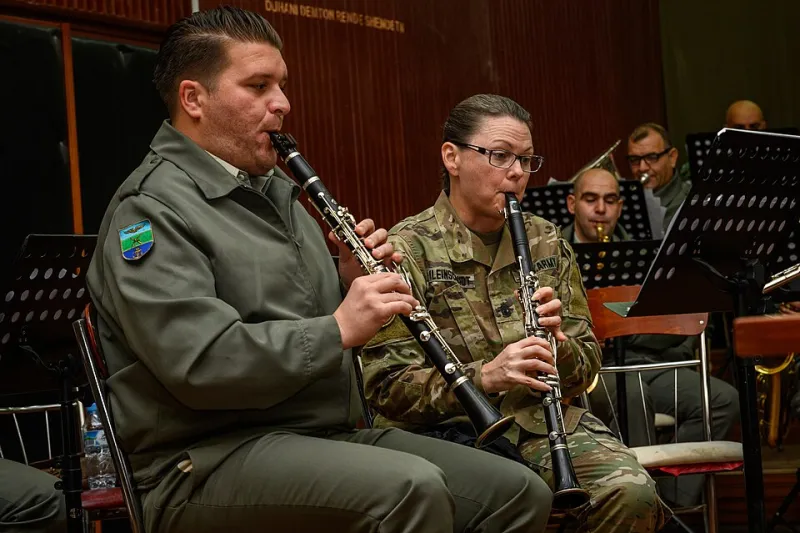
Photo: U.S. Army National Guard photo by Spc. Michael Schwenk, Public domain, via Wikimedia Commons
Four Walls and a Dream: The Garages, Church Halls and Garden Sheds Keeping Britain's Bands Alive
Before the gig. Before the recording. Before anyone outside the band has heard a single note. There's a room. Usually cold. Often damp. Almost certainly not soundproofed to any meaningful standard. A room where someone's dad's old carpet has been stapled to the walls in an optimistic gesture towards acoustic treatment, where the extension lead is doing things no electrician would sanction, and where four people with instruments are trying to turn noise into something that means something.
This is where British music actually starts. Not in studios. Not on stages. In sheds, garages, church hall annexes and community centre side rooms hired on a Tuesday evening for less than it costs to buy a round of drinks.
The Invisible Infrastructure
Talk to any working musician in Britain — from the weekend warrior in a covers band to the touring indie act — and they'll have a story about a rehearsal space that shaped them. The draughty Scout hut where a now-famous songwriter first figured out their sound. The church hall in Wolverhampton where three teenagers spent every Saturday for two years turning into a band worth watching. The garage in Leeds that hosted five different groups at various points in the 1990s and launched more careers than anyone bothered to count.
This informal network of low-cost spaces is, in a very real sense, the foundation of British band culture. It's also almost entirely invisible to the people who write about music, the people who fund culture, and the people who make policy around it. Because it doesn't look like infrastructure. It looks like a bloke letting a local band use his garage for £20 a week.
"That's exactly what it is," says Phil, who's been renting out his converted outbuilding in Derbyshire to local bands for seven years. "I did it because my son was in a band and I knew how hard it was to find somewhere affordable. And then other bands heard about it and it just... grew."
Phil charges £15 for a three-hour session. He's not making money. He's barely covering the electricity. But he has a waiting list, and he's watched bands rehearse in his building and then go on to play real venues, release records, build actual followings. He finds that, he says, quietly brilliant.
The Cost Problem
The commercial rehearsal studio market has always been a challenging business. The margins are thin, the equipment requires constant maintenance, and the clientele — bands, by definition — are not typically flush with cash. But in recent years, the economics have become increasingly brutal.
Rising energy bills have pushed up the running costs of commercial rehearsal spaces significantly. Business rates in urban areas — where most musicians actually live — have made ground-floor studio spaces prohibitively expensive for all but the best-capitalised operators. Insurance costs have crept up. And the broader cost-of-living squeeze means that bands themselves have less to spend on rehearsal time, driving them back towards the informal options.
The result is a quiet contraction. Commercial rehearsal studios in cities across Britain have closed with little fanfare over the past five years. A few have been replaced by new operations, but the overall trend is downward. And when a commercial studio closes, it doesn't just affect the bands who used it — it increases pressure on the informal network that was already stretched.
"We lost two commercial studios in our area in 2022," says Gemma, who books rehearsal time for a band in the South West. "Suddenly everyone was scrambling for the same church halls and community rooms. Prices went up, availability went down. Some bands just stopped rehearsing regularly because they couldn't make it work."
This is the thing that doesn't make headlines but matters enormously: bands that can't rehearse don't improve. They don't develop their sound. They don't build the kind of tight, confident performance that gets them booked for better shows. The rehearsal space problem is, at its root, an artistic development problem.
The Church Hall Champions
Step into the administrative offices of almost any Anglican church in Britain and you'll find a booking diary for the hall that includes, somewhere in its pages, at least one band. Often several. The Church of England, without ever having intended to become a patron of grassroots music, has functioned as exactly that for decades.
Church halls are cheap. They're available at odd hours. They're spread across the country in a way that no commercial network could replicate. And the people who manage them — the church administrators, the volunteer hall committees — are often surprisingly sympathetic to the idea of local musicians needing a space.
"We've had bands in here for years," says the hall manager of a Methodist church in Yorkshire. "As long as they're respectful, they tidy up, and they don't play past nine, we're happy. It's what the hall is for. Community use."
The rates are typically nominal — somewhere between £8 and £20 per session depending on location and the generosity of the congregation. For a band splitting costs four or five ways, that's manageable. Just about.
What Gets Lost
When these spaces disappear — when the church hall gets converted, when the community centre cuts its evening bookings to save on heating costs, when the bloke with the garage decides the hassle isn't worth it — something real is lost.
Not just rehearsal time. The space to experiment. The freedom to be terrible for a while, in private, without it mattering. The ability to try something new without the clock ticking at commercial rates. The sense of a place that belongs, however temporarily, to the band.
There's a particular kind of creative confidence that only comes from having somewhere to work that doesn't feel borrowed or rationed. Where you can leave your amp set up between sessions. Where you can come back on a Wednesday evening just to noodle around. Where the music can breathe.
"The best things we ever wrote came from messing about in that room," says Tom, guitarist in a Manchester-based band who rehearsed for three years in a friend's converted shed. "No pressure, no audience, no agenda. Just seeing what happened. You can't put a price on that."
Actually, you can. It's £15 for three hours in Phil's garage in Derbyshire, if you can get on the waiting list. And it's worth every penny.