Staples, Passion and Printer Ink: The Stubborn Survival of Britain's Fanzine Culture
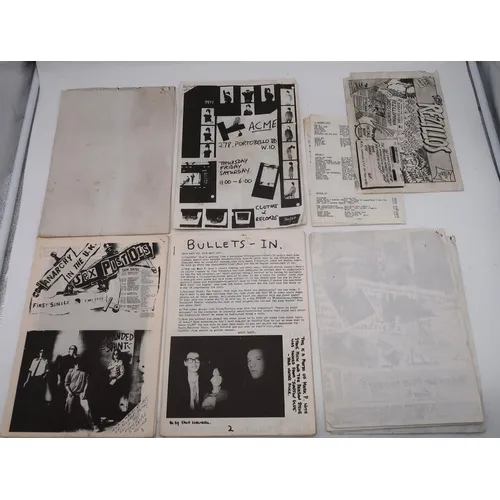
Photo: vintage punk fanzine zine pages stapled DIY music magazine, via content.easyliveauction.com
Staples, Passion and Printer Ink: The Stubborn Survival of Britain's Fanzine Culture
Somewhere in a terraced house in Sheffield, a woman in her late fifties is laying out pages on her kitchen table. She's been doing this, in one form or another, since 1979. The font has changed. The photocopier has been replaced by a laser printer. But the staple gun is the same one she bought from Woolworths before the band she loved had even released their second single.
That image — unglamorous, domestic, quietly defiant — is the true heart of Britain's fanzine tradition. Long before anyone had a platform, these people made one. And remarkably, stubbornly, they're still at it.
Before the Algorithm, There Was the Staple Gun
The British fanzine explosion is usually pinned to punk, and with good reason. When the music press in the mid-seventies felt distant, corporate, and frankly a bit bored by anything that wasn't prog rock, kids who'd just seen the Sex Pistols at the Marquee picked up typewriters and spirit duplicators and started writing the truth as they understood it. Sniffin' Glue, launched by Mark Perry in 1976, is the one everyone cites — famously rough, famously honest, famously short-lived. But it was the template for thousands of others that followed across the country.
 Photo: Sex Pistols, via www.rollingstone.com
What made fanzines different from the music press wasn't just the budget. It was the relationship to the reader. There was no advertising department softening editorial decisions. No editor-in-chief worried about losing an exclusive. Just someone who genuinely cared, writing for people who genuinely cared, about music that genuinely mattered to them. The bias was worn openly. The enthusiasm was embarrassing in the best possible way.
Through the eighties and nineties, fanzines mutated to serve every subculture Britain produced. Indie kids, metal heads, rave scene devotees, Northern Soul obsessives — all of them had their own underground publishing networks, distributed through record shops, handed out at gigs, posted to subscribers who'd sent a stamped addressed envelope and a couple of quid.
The Internet Was Supposed to Kill Them
When blogs arrived, the obituaries were written. Why would anyone spend money on printing and postage when they could post their opinions online for free? The answer, it turns out, is the same reason people still buy vinyl when streaming is cheaper and easier: because the object itself carries meaning that the digital version simply doesn't.
Pick up a fanzine — even a badly photocopied one from 1987 — and you're holding someone's labour. You're feeling the weight of their conviction. The smudged ink, the slightly wonky layout, the hand-drawn logo on the cover: none of it is accidental. It's the physical evidence of a decision to spend money and time on something that will never make money back, purely because it needs to exist.
That argument hasn't aged. If anything, in an era of content farms and AI-generated listicles, it's become more compelling.
The Veterans Still Going
Across Britain, a surprising number of fanzines from the punk and post-punk era never fully stopped. Some went on hiatus for a decade, then came back. Others shifted to annual issues. A handful never missed a beat.
Talk to the people still producing them and you hear a consistent theme: the print edition is a statement of intent. It tells readers — and the bands being covered — that this isn't casual content creation. It's commitment. Several veteran publishers describe the satisfaction of handing a copy to a musician they've written about and watching them hold it. 'They always seem surprised,' one long-running fanzine editor from Manchester told me. 'Like they didn't know anyone still did this. That reaction alone makes it worth it.'
The economics are, to put it politely, challenging. Print runs are typically between 100 and 500 copies. Cover prices rarely cover costs. Most publishers absorb the shortfall because they've accepted it's never been a business — it's a vocation.
The New Guard
What's genuinely exciting is that the fanzine tradition is attracting new practitioners who have no nostalgic reason to do it. They grew up with social media. They know how to build an audience online. And they're choosing print anyway.
For many in their twenties, the zine is partly a reaction to the ephemerality of digital content. A post disappears into the feed within hours. A physical zine sits on a shelf, gets lent to a friend, turns up at a car boot sale twenty years later. There's a permanence to it that feels radical in 2024.
The newer generation also tends to blend formats in ways their predecessors couldn't. A zine might have an accompanying Instagram account, a Bandcamp page for a compilation, a limited-run print edition sold through a small distro network. The physical and digital aren't in competition — they're complementary.
Why No Algorithm Can Replace It
Here's the thing about fanzines that streaming platforms and social media recommendation engines can't replicate: they're curated by a specific human being with a specific sensibility, and that sensibility is the whole point.
When you read a fanzine, you're not receiving content optimised for engagement. You're receiving the genuine opinions of someone who stayed up until two in the morning because they had something to say. The credibility isn't manufactured. It's earned through the simple fact that no rational economic calculation supports the decision to do it.
In a media landscape increasingly shaped by what performs rather than what matters, that's not a small thing. It might, in fact, be the most important thing.
The woman in Sheffield is still at her kitchen table. The pages are still coming together. The staple gun is still loaded. Good.